
A Clear Blue Morning: The Story of 9/11
Tuesday 11 September 2001 began in the north-eastern United States with cloudless skies and mild air. Commuters crowded into Lower Manhattan, children settled into classrooms, and a few hundred miles away flights were boarding on schedule. Within two hours, the country would be in a state of shock that still shapes its politics, its airports and its public memory.
Here is a plain account of what happened, who was lost, and how the day is remembered.
Two Towers on the Skyline
The World Trade Center was conceived as a hub for international commerce in Lower Manhattan. Designed by the architect Minoru Yamasaki, its twin towers rose to roughly 1,360 feet each and were completed in the early 1970s, becoming the tallest buildings in the city. They were already a target once before: in February 1993 a truck bomb exploded in the complex's underground car park, killing six people and injuring more than a thousand. The towers reopened and continued to hold tens of thousands of workers and visitors each day.
The Morning of 11 September
Nineteen men linked to the militant network al-Qaeda hijacked four passenger aircraft shortly after take-off from airports on the East Coast. The sequence unfolded quickly:
- 8:46: American Airlines Flight 11 struck the North Tower of the World Trade Center.
- 9:03: United Airlines Flight 175 hit the South Tower, as television cameras watched live.
- 9:37: American Airlines Flight 77 crashed into the western side of the Pentagon, outside Washington DC.
- 10:03: United Airlines Flight 93 came down in a field near Shanksville, Pennsylvania, after passengers and crew tried to retake the aircraft.
The South Tower collapsed at 9:59, and the North Tower followed at 10:28. Debris and fire brought down other nearby buildings, including 7 World Trade Center later that afternoon. For the first time, civil aviation across the country was grounded, and aircraft already in the air were directed to land wherever they could.
The People Behind the Number
The attacks killed 2,977 people, not counting the hijackers. Most died in New York, with 184 at the Pentagon and 40 on Flight 93. They came from dozens of countries and from every kind of job: office workers, cleaners, chefs, security guards, flight crews, military personnel and visitors.
The emergency services bore a particular loss. The New York City Fire Department lost 343 members, and dozens of police officers from the city and from the Port Authority also died as they helped people leave the buildings. Thousands escaped the towers, many guided down smoke-filled stairwells by those who then went back up.
A Changed Country and a Changed World
The response was swift and far-reaching. Within weeks Congress passed the USA PATRIOT Act, and the Transportation Security Administration was created to take over airport screening. In 2002 the Department of Homeland Security was formed to coordinate domestic security. Abroad, the United States and its allies launched military action in Afghanistan in October 2001, the opening phase of what became known as the War on Terror. A second conflict began in Iraq in 2003.
An independent national commission examined how the attacks had been planned and missed, and published its report in July 2004. Its findings led to reforms in intelligence sharing. The al-Qaeda leader Osama bin Laden, long regarded as the mastermind, was killed by American forces in Pakistan in May 2011.
The human cost continued long after the dust settled. Many rescue and recovery workers, and residents of Lower Manhattan, later developed serious illnesses, which led Congress to establish a health and compensation programme for those affected.
Places of Remembrance
New York
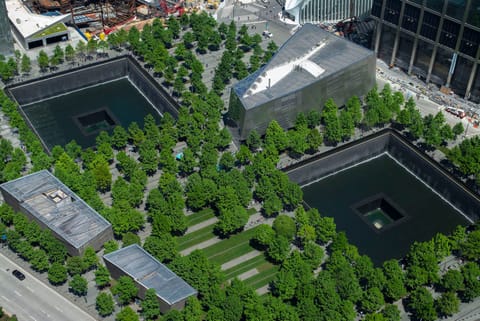
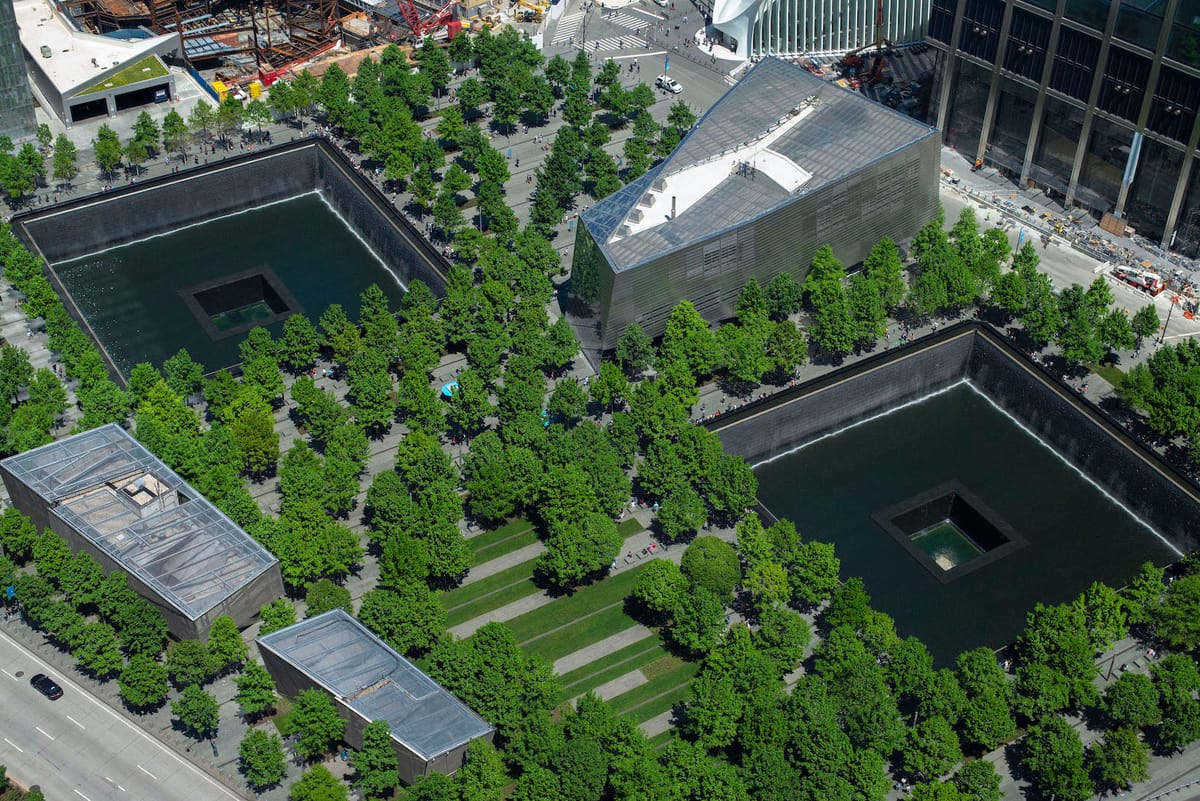
The National September 11 Memorial opened on 11 September 2011. Its two square pools, set within the footprints of the original towers, are among the largest man-made waterfalls in North America, and the names of the victims are inscribed in bronze around their edges. The museum opened beside it in 2014, and One World Trade Center, which stands 1,776 feet tall as a nod to the year of American independence, rose nearby.
Washington and Pennsylvania
The Pentagon Memorial, opened in 2008, places 184 illuminated benches across a landscaped plot, one for each person lost there. In Pennsylvania, the Flight 93 National Memorial marks the crash site and includes the Tower of Voices, a tall structure holding 40 wind chimes.
What the Day Leaves Behind
Each year, on the anniversary, the names of the dead are read aloud in New York, and the moments of impact are marked with silence. For a generation that remembers it, 9/11 is a fixed point in time. For younger people, it is history learnt through museums and testimony. The memorials ask the same thing of both: to remember the individuals first, and to understand how a single morning altered so many lives.