
Humming Along the Coast: The Manx Electric Railway
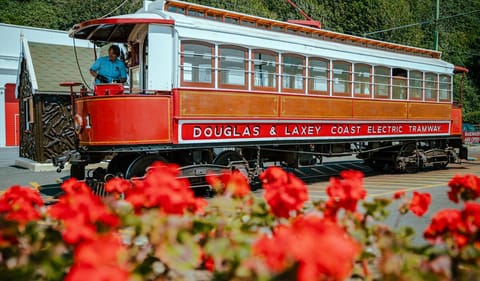
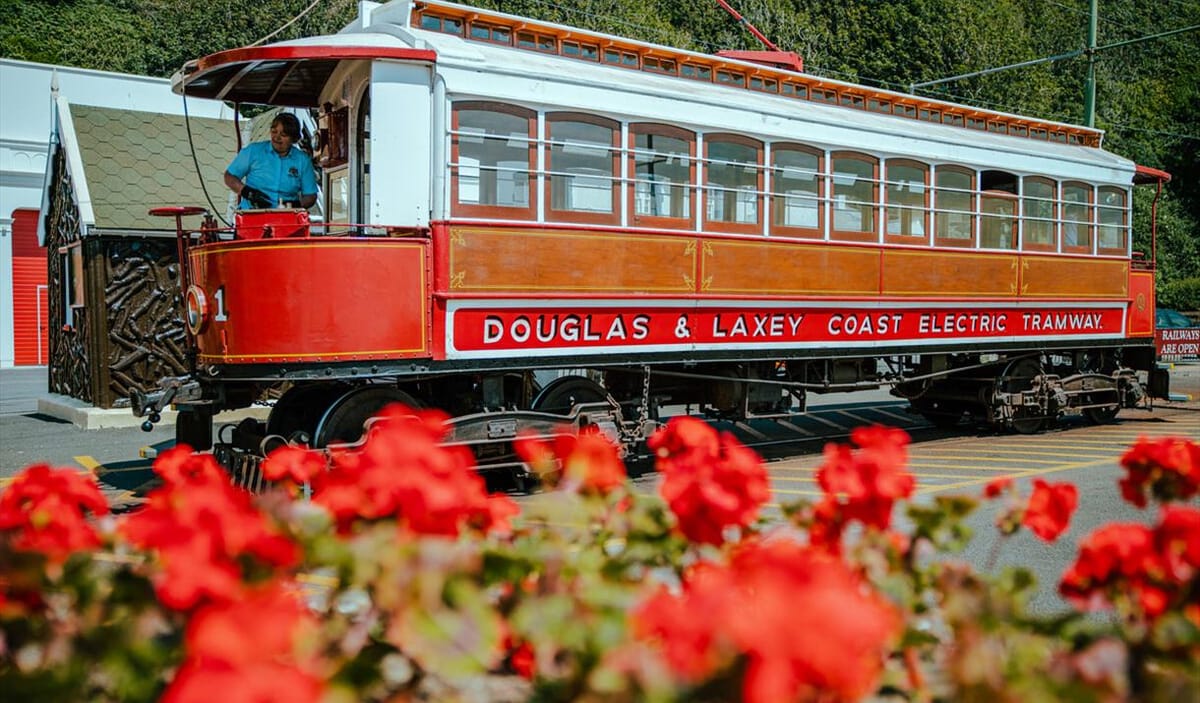
On a summer morning at the northern end of Douglas promenade, a wooden tramcar waits beside its shed with a low electrical murmur. Its varnished sides are scuffed by decades of weather, and its bench seats face the sea. When it moves off, it will do so much as its predecessors did in the 1890s. The Manx Electric Railway is a Victorian railway that never became a museum piece, and the ride from Douglas to Ramsey remains one of the most characterful short journeys on the Isle of Man.
A Line Born of Property Ambition
The railway began as a scheme to sell land. Alexander Bruce, a banker, Frederick Saunderson, a civil engineer, and Alfred Jones Lusty, a landowner, formed the Douglas Bay Estate company to develop ground north of the town. A fast, clean tramway would bring residents and holidaymakers to it. The first section ran from Derby Castle in Douglas to Groudle Glen, and regular public services began on 7 September 1893.
The promoters were already thinking further. The company that took on the line was known as the Douglas and Laxey Coast Electric Tramway Company, a name that announced the next stage. That extension to Laxey opened in 1894.
Reaching Ramsey
The final push north was the most demanding. The line climbs and dips along the cliffs, crosses glens on viaducts and passes through farmland before descending into the northern town. The extension into the centre of Ramsey opened on 24 July 1899, completing a route of about 17½ miles on a 3 ft gauge.
Laxey became the line's natural hinge. Here passengers change for the Snaefell Mountain Railway, and the Great Laxey Mine Railway and the Laxey Wheel lie close by. The electric line also gave the Island's east coast a modern link between its resorts, villages and farms, and it carried mail and freight as well as day-trippers.
The Cars That Stayed
The original trio of motor cars was built in 1893 by G.F. Milnes & Co. at Birkenhead and worked on a 550-volt direct current supply. Two of them, Nos. 1 and 2, are still in service. They hold a joint Guinness World Records entry as the oldest fully operational tramcars still running on their original line.
They are not alone. The fleet still contains a good deal of Victorian and Edwardian rolling stock, including motor cars with trailers of several types, from open crossbench designs to enclosed saloons. Each tram earns its keep as a working heritage tram, not as a static exhibit. Along the route, simple corrugated iron shelters painted green and cream mark many of the halts, such as the one beside Minorca viaduct.
Close Calls and Rescue
The line's story has not been smooth. In 1902 the assets were bought by Herbert Kidson on behalf of a group of Manchester businessmen, and the Manx Electric Railway company was born. Later, investment in track and equipment became a matter of public policy. From 1957 the government funded a ten-year rail replacement programme between Derby Castle and Laxey.
The northern section proved more vulnerable. In 1975 the railway lost its mail contract and services between Laxey and Ramsey were suspended. After public protest, trams began running to Ramsey again in 1977. Until 1998 the line ran all year, but since then it has operated seasonally, generally from March to early November, with dates that can change from year to year.
Riding the Line Today
The full journey takes about 1 hour 15 minutes, with around fifty stations, stops and halts along the way. Services leave from Derby Castle in Douglas, from Laxey and from Ramsey, so it is possible to ride only a section. It is worth checking the current timetable before setting out, as the season and frequency vary.
The scenery shifts constantly. Early on, the tram runs close to the shore. Beyond Laxey it follows the cliff tops and drops into wooded glens. Stops include Groudle Glen, with its own small heritage railway nearby, Dhoon Glen, Ballaglass Glen and Ballajora, which is the halt for Maughold village. At Ramsey Station, the town centre and shops are a short walk away, and the journey back is as rewarding as the outward leg.
A Lasting Hum
Many electric tramways of the 1890s vanished long ago under buses and cars. The route from Douglas to Ramsey survived through changes of owner, periods of doubt and a public that refused to let it go. Today it is part of the Island's heritage railways, and it gives visitors a working link with the first generation of electric transport. Its trams have been carrying passengers since 1893, and the line is a place to understand how people once travelled, as well as to look at it.