
Turning Above the Glen: The Story of the Laxey Wheel
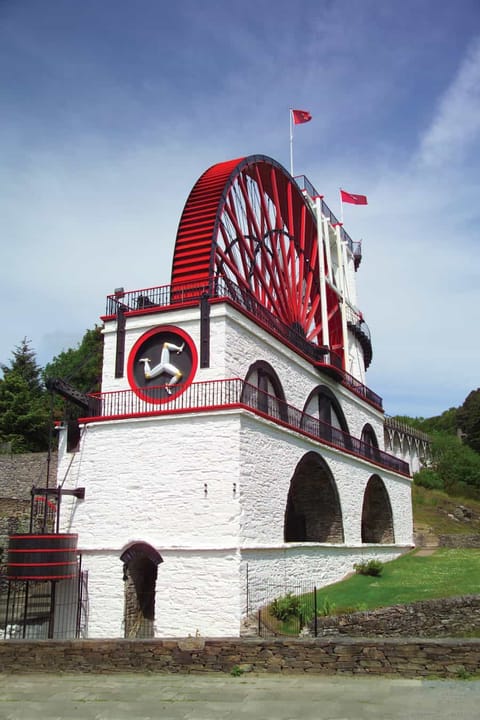
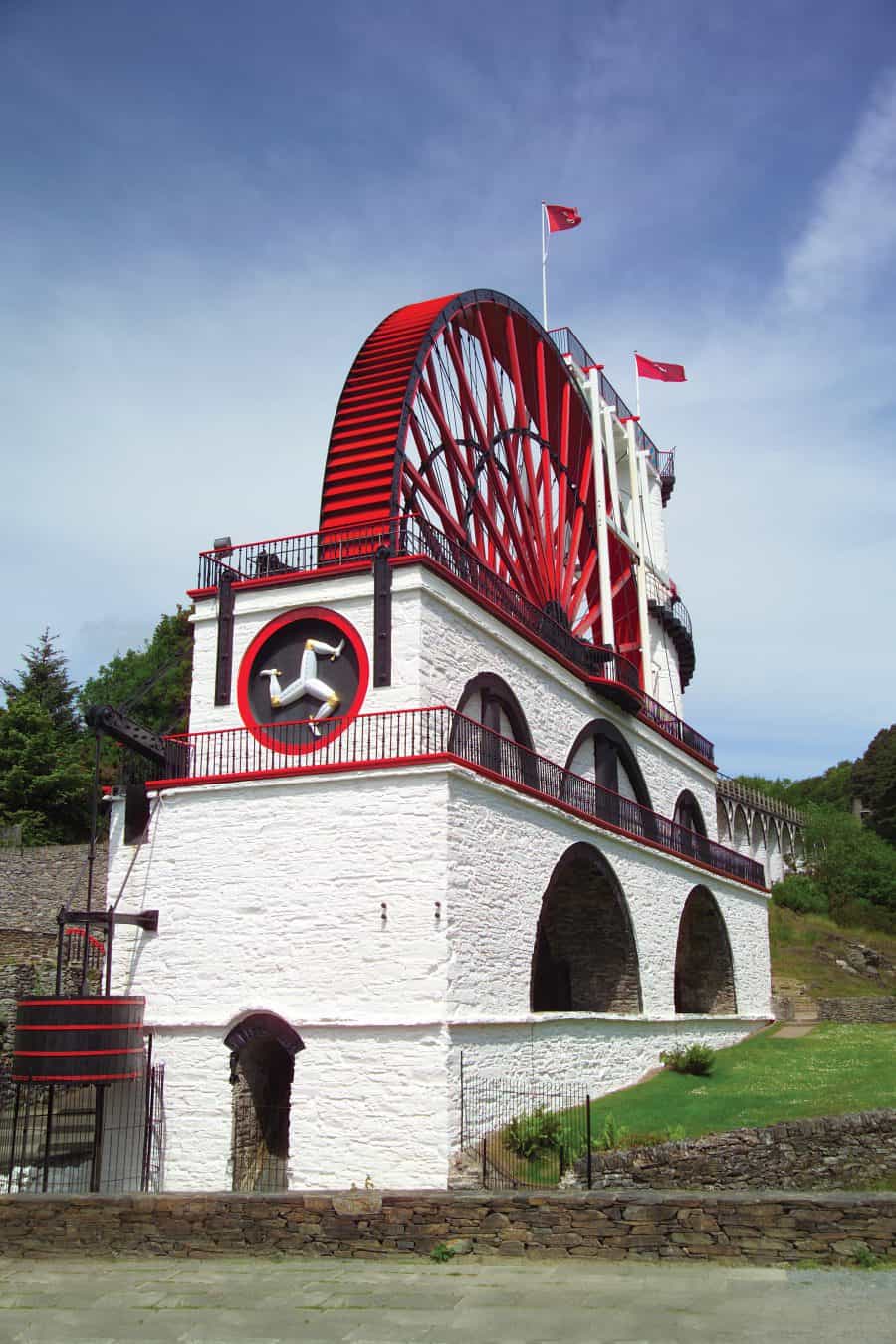
Follow the road up from Laxey village and the first sign of the wheel is its movement: a slow, steady turn of spokes and timber buckets against the green of the hillside. Close up, it is far larger than most visitors expect. The Laxey Wheel, christened Lady Isabella, stands 72 feet 6 inches across and has been lifting the eye of every traveller to the Isle of Man for more than 170 years.
Today we walk up the glen to see why it was built, who made it, and how it escaped the scrapyard to become an icon.
Lead, Zinc and a Flooding Problem
The story begins underground. Zinc and lead ore were found in the Laxey valley in the 1780s, and by the middle of the 19th century the Great Laxey Mining Company was working a large complex of shafts and levels. The deposits also yielded copper and a little silver, and at its peak the workforce numbered around 600.
The difficulty was water. The deeper the miners dug, the more the workings flooded, and pumping it out was the key to staying in business. Steam engines were the usual answer on the mainland, but the Isle of Man has no coal of its own, and shipping fuel to a remote valley was costly. The valley did, however, have plenty of rain and fast-running hillside streams.
An Engineer's Answer
The solution came from Robert Casement, a self-taught Manx engineer. His plan was to harness the streams themselves. Channels gathered water from the surrounding hills into a cistern, and a pipe carried it across a bridge to the top of a stone tower. From there it dropped onto the wheel, filling the buckets on the rim so that the weight of the water turned the wheel.
The build was largely a local effort. The wheel's axle was forged in Liverpool, but the iron rims were made in Douglas and Manx craftsmen shaped the timber. The finished wheel is 6 feet wide, weighs roughly 70 tonnes and turns only a few times a minute. A crank on the axle converted that rotation into a back-and-forth motion, which a long rod carried along a stone viaduct to the mine shaft some 200 yards away. There it drove pumps that raised water from about 1,500 feet below ground, at up to 250 gallons a minute.
Opening Day, 1854
The wheel was started on 27 September 1854 by the Lieutenant Governor, Charles Hope, and it was named after his wife, Lady Isabella. Thousands of people are said to have gathered in the glen to watch it turn for the first time.
It was a showpiece of Victorian engineering, and it became a tourist draw almost at once. Yet it was first and foremost a working machine, and for decades it did exactly the job Casement had designed it for.
A Mine in Difficulty
The Laxey Mine did not stay profitable for ever. As the best ore ran out and cheaper imported metal arrived, the original company went into voluntary liquidation in 1901. A new company followed in 1903, and another was formed in 1920, but none found enough workable ore to secure the future. The mine closed in 1929, and the pumps that the wheel had driven for 75 years fell silent.
Saved from the Scrapman
With the mine gone, the wheel was due to be broken up. A Laxey builder, Edwin Kneale, stepped in to buy it and opened it to visitors, who paid to climb the structure and see it turning. Keeping such a large timber and iron machine in repair was expensive, though, and eventually the takings could no longer cover the costs.
In 1965 the Manx Government bought the wheel and the surrounding site. A restoration returned it to its original working appearance, and it later passed into the care of Manx National Heritage. Its timber and ironwork still need regular attention, and specialist volunteers have been called in to repair worn buckets high above the ground.
The Wheel Today
The Laxey Wheel is now the centrepiece of the Great Laxey Wheel and Mines Trail, which also takes in the mine workings in the valley. It is widely described as the largest working waterwheel in the world. It no longer pumps anything, but it still turns for visitors, and a spiral stair of 96 steps leads to a platform at the top with views along the Laxey valley to the sea.
It has also become a national symbol. The wheel appears on the reverse of the £20 notes issued by the Isle of Man Government, and in 2004 it marked its 150th anniversary.
The mine it served is long closed, and the miners who worked beneath the glen are gone. What remains is a machine that was built for a practical purpose and has outlasted the industry around it. As a monument to Manx skill and Victorian engineering, the wheel still turns above the glen.