
Sails Above the Cane: The Story of Morgan Lewis Windmill, Barbados
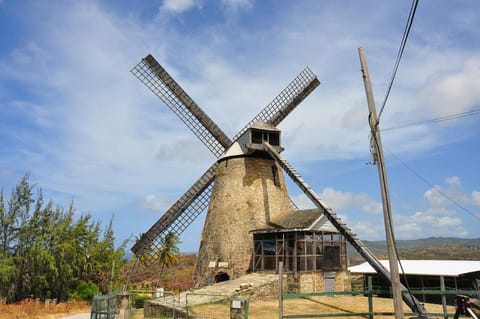
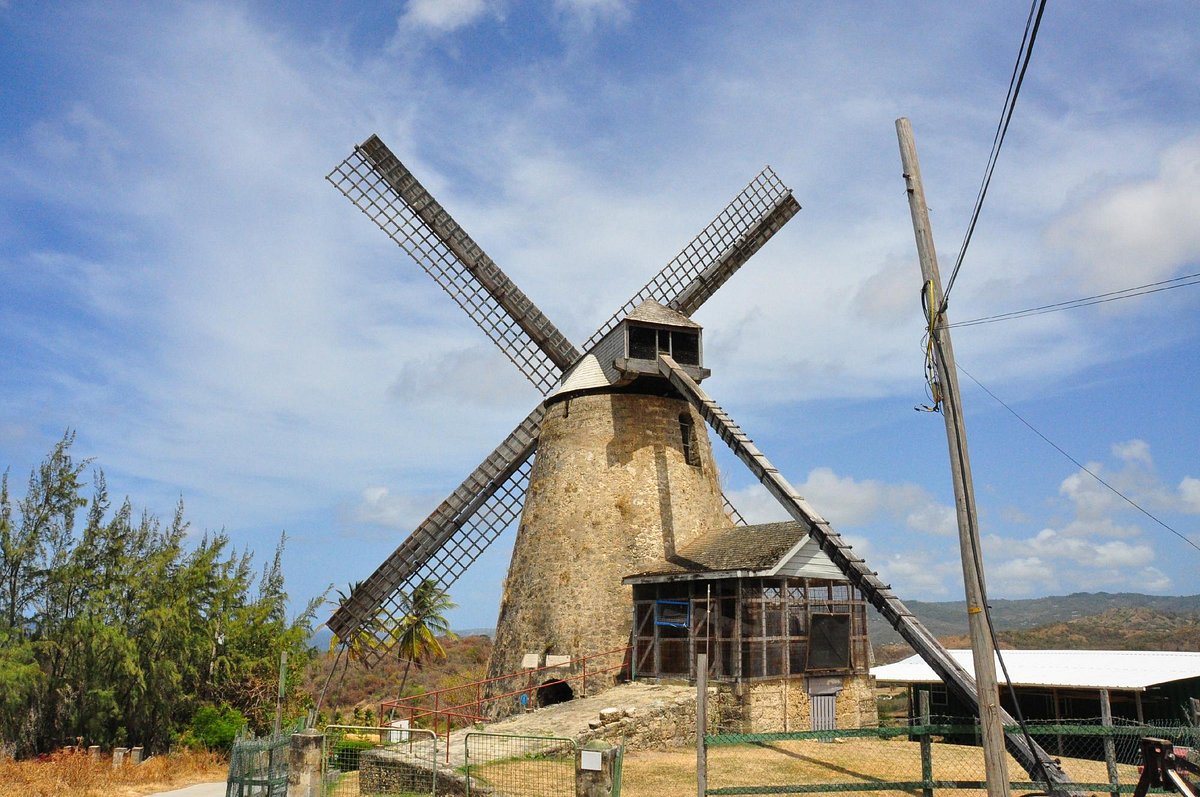
On a breezy ridge in the north-east of Barbados, a round stone building stands above the cane fields with four wooden sails held against the sky. Below it the land tumbles towards the Atlantic, green and broken, and the wind arrives with nothing in its way. For more than two centuries that wind did the work here, turning heavy rollers that crushed sugar cane.
Today we climb to Morgan Lewis Windmill in the parish of St Andrew, to see how a working sugar mill became one of the best-loved pieces of Caribbean heritage.
Wind, Cane and a Changing Barbados
Sugar transformed Barbados in the seventeenth century. Cane had been introduced to the Caribbean earlier, but it was around the 1650s that wind-powered mills arrived on the Barbados plantations, bringing Dutch engineering skills and the money of investors. Cane had to be crushed soon after cutting, before the juice spoiled, and a windmill was a far quicker answer than animals or human muscle alone.
By the 1700s, Barbados had become one of Britain's most valuable possessions in the Americas, and its skyline was dotted with mills. Hundreds once stood across the countryside, and the trade winds that blow in steadily from the east made the sites easy to choose.
A Mill on the Ridge
Morgan Lewis Mill is commonly dated to about 1727, although the exact year is uncertain. It stands in the hilly Scotland District, roughly halfway between the top of Cherry Tree Hill and the village of Shorey, where it catches the wind and commands a wide view of the east coast.
The design is a tower mill. A fixed rubble-stone body carries a cap that can be turned so the sails face the wind, and inside, a system of gears transmits the motion to rollers that squeeze the cane. The juice ran by gravity to a boiling house placed at a lower level, where it was reduced to sugar and molasses. Visitors can still see how the pieces fitted together, which is rare. Most Barbadian mills survive only as bare walls, many of them reused as sheds, water stores or even homes.
The People Behind the Sugar
The wealth of the plantation economy rested on the forced labour of enslaved Africans and their descendants. They cut the cane, fed it to the rollers and tended the boiling house, in work that was hot, relentless and dangerous. A visit to the mill is partly a visit to that history, and the care with which it is now interpreted reflects this.
After emancipation in the 1830s, sugar remained central to Barbadian life, and the mill went on grinding cane for another century. Steam and later motorised factories gradually took over the industry, and wind-powered mills fell out of use one by one.
The Last Turn and the Long Rescue
Morgan Lewis was among the very last windmills to work commercially in Barbados, finally stopping in the mid-1940s. Sources differ by a year or two on the precise date. The structure then stood idle, in danger of following its neighbours into ruin.
In 1962 its owner, E L Banister, gave it to the Barbados National Trust, which began restoration in the mid-1960s and carried out further work in 1974. Neglect and the tropical climate took their toll again, and the mill was named on the World Monuments Fund's list of endangered sites. A fresh restoration followed, and the mill reopened to the public in December 1999 with a ceremony in which cane was ground once more. It also earned recognition from the American Society of Mechanical Engineers as a historic engineering landmark.
The mill has since had its share of weather. Storm damage to the sails in 2018 was a reminder that a building designed to harness the wind is also exposed to it.
Morgan Lewis Windmill Today
The mill is owned and managed by the Barbados National Trust and is open to visitors. Inside, the timber gears and rollers show how a single sail's turn became crushing force. During the cane harvest season the sails are sometimes set to work, and tours may include a taste of freshly pressed juice. Check the Trust's current opening details before travelling, since arrangements change.
The mill's silhouette is familiar to Barbadians, having appeared on a postage stamp in 1970 and on the 25 cent coin. The surrounding fields have been used for dairy farming, and the drive along Cherry Tree Hill makes a natural companion to a visit.
A Landmark Worth Keeping
Morgan Lewis Windmill endures because it tells the whole story at once: the ingenuity of its engineering, the wealth sugar created and the human cost behind it. As the last complete sugar windmill in the Caribbean, it offers a rare chance to stand inside a working machine of the plantation age. Its sails still catch the wind above the cane, and its survival is a testament to what a community can save when it chooses to.