
Tintern Abbey: Wales's Great Ruin on the River Wye
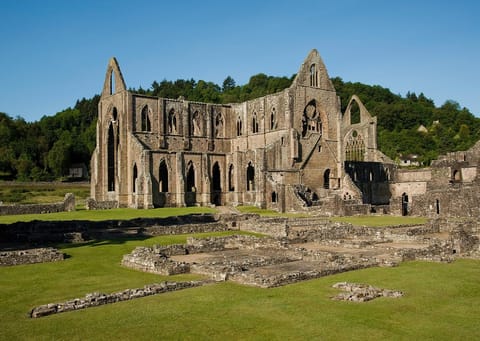
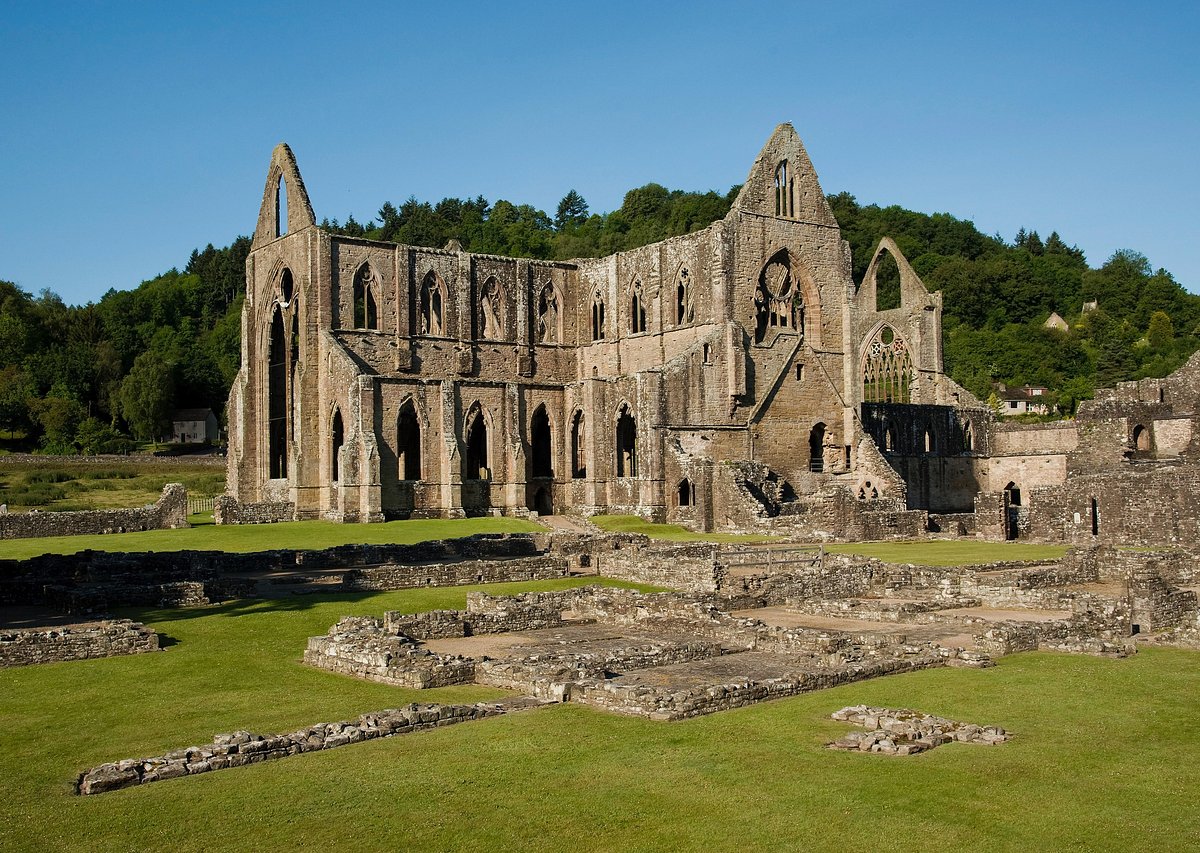
On the Welsh bank of the River Wye, the roofless walls of Tintern Abbey stand among woods and water meadows, their great windows open to the sky. Founded in the 12th century by Cistercian monks, the abbey was one of the richest religious houses in Wales. After the Reformation it became one of the most painted and most written-about ruins in Britain.
This article traces how the abbey was built, how it fell, and why it still draws visitors today.
A Foundation by the River
Tintern was founded in 1131 by Walter de Clare, Lord of Chepstow. The first monks came from L'Aumône in France. It was the first Cistercian house in Wales and the second in Britain, after Waverley in Surrey.
The Cistercians were a reforming order who sought simplicity, prayer and manual labour. They deliberately chose remote, well-watered valleys, and the secluded Wye suited them. The monks wore undyed wool habits, which gave them their nickname, the White Monks.
Life in a Cistercian Community
The community followed the Rule of St Benedict, a daily round of worship, reading and work. Services began in the small hours and continued through the day. Alongside the choir monks lived lay brothers, who carried out much of the farming and practical labour on the abbey's lands.
Land, Wool and Water
Like other Cistercian houses, Tintern grew prosperous through careful estate management. Granges, or outlying farms, supplied food and wool, and the river gave the monks a route for trade and a supply of fish. Over the centuries the abbey became a significant landowner in the surrounding area.
Gothic Ambition
The first stone church was modest, but by the late 13th century the community had the means and ambition to start again. Roger Bigod, Lord of Chepstow and Earl of Norfolk, was a major patron of the rebuilding. The new church was laid out in a cruciform plan, with a long nave, transepts and a tall eastern end.
The work was carried out in the Decorated Gothic style, with large windows filled with elegant stone tracery. That tracery is what gives the ruin its lightness today. The church was substantially complete by the early 14th century, and its shell is still the abbey's most striking feature.
Dissolution and Decline
The abbey's long life ended in 1536, when it was surrendered to the Crown during Henry VIII's Dissolution of the Monasteries. The community was small by then. The buildings were stripped of valuable materials, above all the lead that covered the roofs. Without a roof, the church began to decay.
Over the following centuries parts of the site were put to other uses. Stone was taken for local buildings, and the valley's ironworking and wire-making industries operated nearby. Ivy and other plants took hold of the walls, and the abbey settled into the quiet decay that later visitors found so appealing.
Poets, Painters and the Wye Tour
In the 18th century, travellers began to seek out wild and picturesque scenery. The Reverend William Gilpin's account of the Wye Valley, published in 1782, helped to popularise river trips from Ross-on-Wye, and Tintern became one of the highlights of what is now called the Wye Tour.
Artists were quick to follow. J. M. W. Turner drew and painted the abbey in the 1790s, and it was a favourite subject for many other painters of the period. In 1798 William Wordsworth composed his poem Lines Written a Few Miles above Tintern Abbey. Strictly speaking, the poem is about the landscape rather than the ruin, but it tied the poet's name to the place.
Exploring the Abbey Today
The site is now cared for by Cadw, the Welsh Government's historic environment service. It is easy to walk around the church and the surrounding monastic buildings.
The Abbey Church
Start in the nave, where the rows of tall arches still show the scale of the building. The great west front and the east window are the most dramatic remains, their stone tracery framing the trees and sky beyond.
The Monastic Buildings
To the north of the church are the cloister and the rooms around it. Visitors can still make out the chapter house, the day room, the refectory and the kitchens. The infirmary and the abbot's lodgings lie further out. Together they give a clear impression of how the community lived and worked.
Planning a Visit
- Location: the village of Tintern in Monmouthshire, in the Wye Valley, a few miles north of Chepstow.
- Opening and tickets: times and prices vary by season, so check Cadw's website before travelling.
- Walking: the Wye Valley Walk and Offa's Dyke Path both pass through the area, and there are viewpoints over the valley.
- Best times: early morning and late afternoon are usually quieter, and autumn colour in the woods is especially fine.
A Ruin That Still Speaks
Tintern Abbey has had three lives: as a working monastery, as a ruin that inspired poets and painters, and as a protected heritage site open to everyone. Its walls no longer shelter monks, but they still show what medieval builders and a devout community could achieve in a quiet river val