
Medicine at the Castle Gate: Little Castle House, Monmouth
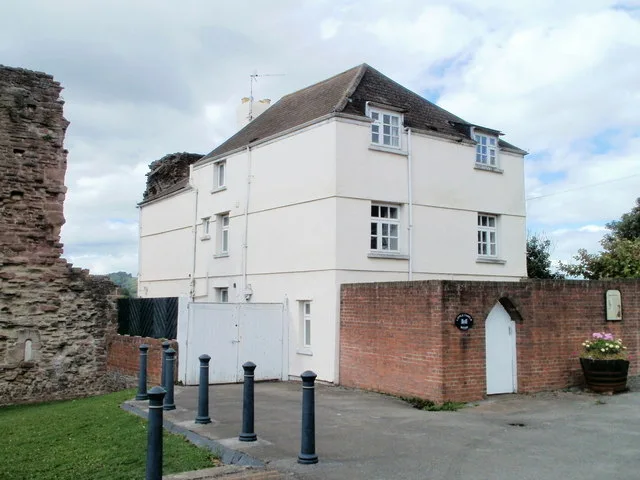
Follow the narrow lane of Castle Hill out of Monmouth's busy centre and the noise of the shops soon fades. At the end, past the grand red-sandstone front of Great Castle House, a small whitewashed building stands close to the broken walls of a Norman fortress. It is easy to take for just another quiet cottage beside the ruins. Yet for several decades this modest house was where Monmouth's poorest residents came to ask for medical help.
This is the story of Little Castle House, one of the town's early medical facilities, and of the hilltop that has served so many purposes over nearly a thousand years.
A Hilltop with a Past
To understand the house, it helps to know the ground it stands on. Monmouth Castle was established between 1067 and 1071 by William FitzOsbern, a close ally of William the Conqueror. He chose a hill that guarded the crossings of the Rivers Monnow and Wye. The first fortress was a ringwork of earth and timber. Around 1150 a stone keep replaced the timber defences, and a great hall followed in the 13th century.
The castle gained a royal link in 1387, when the future Henry V was born there. The Civil War of the 1640s ended its military life. After the round tower partly collapsed in 1647, the site was gradually given over to other uses. In 1673 Henry Somerset, later the first Duke of Beaufort, built Great Castle House on the site of the old tower, reusing stone from the castle.
A Dispensary for the Poor
Little Castle House belongs to a later chapter. It is usually dated to around 1810, and it was built to serve as a dispensary. Its purpose was charitable. The dispensary offered free advice and medicine to people who could not pay a doctor, and it also encouraged vaccination at a time when the practice was still gaining acceptance.
The house stood in the shadow of the castle ruins, a few steps from Great Castle House. The gentry who owned the neighbouring buildings had long been associated with the area, and a charity based here would have been well placed to attract their support.
How the Dispensary Worked
The dispensary depended on goodwill rather than public funds. Its money came mainly from donations, concerts, subscription fees and exhibitions. Local entertainments therefore helped pay for medicine, which tells us something about how closely the charity was tied to the life of the town.
Its medical staff were chosen with some care. Three doctors were appointed each year, and the choice was made after a table setting out their skills and cures had been examined. The dispensary's finances were modest. It had an income of around £200 a year and dispensed roughly £160 worth of medicine annually. That left a small margin for running costs, and it shows how much of the money went straight on treatment.
A Different Kind of Healthcare
It is worth remembering what a dispensary was. It was not a hospital with beds and wards. Patients came for advice and for medicines, and went home again. For a family living on a labourer's wages, even this limited help could matter a great deal. Vaccination in particular was one of the most effective public health measures of the age.
The Move to St James' Square
The dispensary on Castle Hill carried on until 1868. In that year Monmouth Hospital and Dispensary opened at Cartref in St James' Square. The new institution grew out of the earlier work and was funded by local benefactors. The later building in St James' Square is itself a Georgian town house, and it remains a marked stop on the Monmouth Heritage Trail. The St James' Square institution closed in 1903.
With the move, the Castle Hill house lost its medical role. The town's healthcare now had a larger and more central home, and the little building by the castle entered a quieter phase of its history.
Little Castle House Today
Little Castle House is now a private home, so visitors admire it from the lane rather than from inside. It is a pleasant stop for anyone exploring Castle Hill. The castle ruins can be seen at the far side of the yard, and Great Castle House, still home to the Royal Monmouthshire Royal Engineers, stands nearby. A regimental museum opened in one of its wings in 1989.
The house is easy to overlook beside its grander neighbours, but it has a clear place in the story of the town. Its name has long recalled the great house next door, while its original purpose recalls something gentler: ordinary people raising funds, through concerts and subscriptions, to give their poorer neighbours a chance of better health. Few buildings on Castle Hill say as much about everyday Georgian charity.