
Glass and Concrete in Llandaff: Broadcasting House, Cardiff
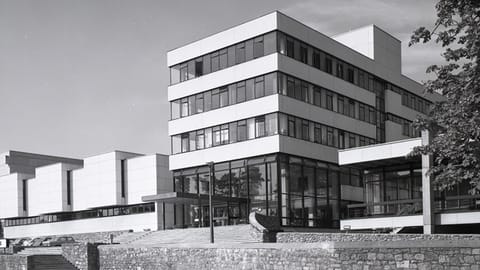
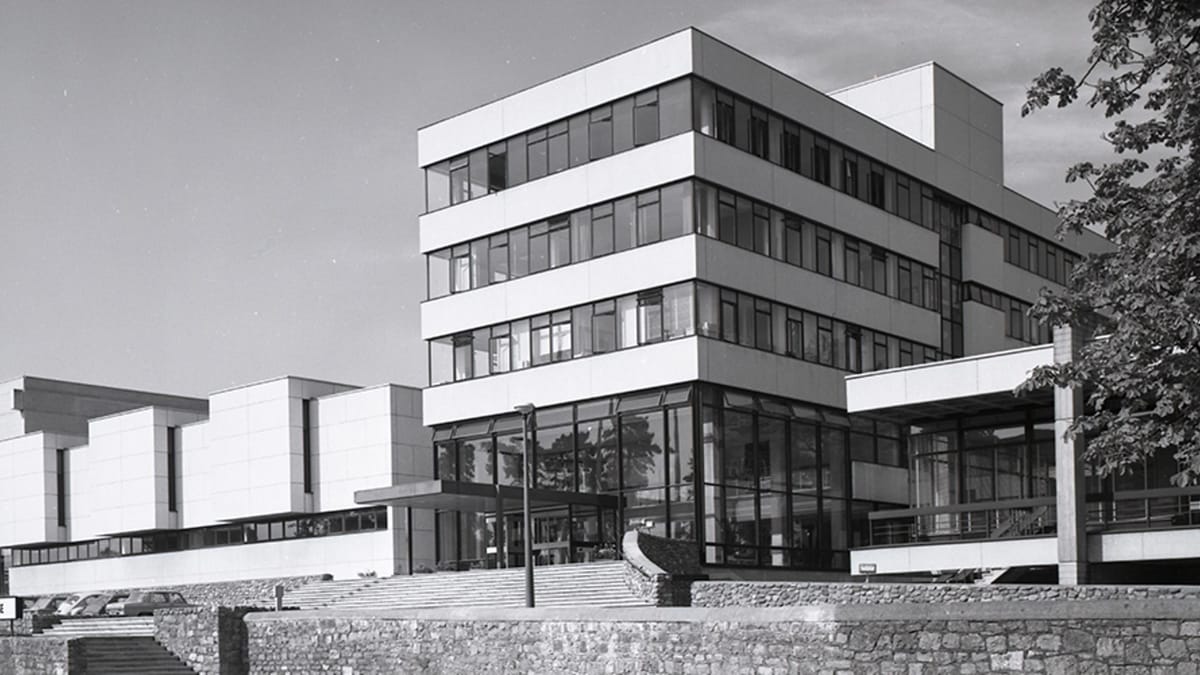
Drive along Llantrisant Road in Llandaff in the late 1960s and you would have passed a long, low building with a wall of glass, and a taller block rising behind it. Inside, presenters, engineers and producers were making the programmes that Welsh audiences watched and heard at home. For more than half a century this was Broadcasting House, the base of BBC Cymru Wales.
The building is gone now, but its story says a good deal about how Wales saw itself on screen and on air. Let us walk through its history, from drawing board to demolition.
A Purpose-Built Home for Welsh Broadcasting
Broadcasting House stood in Llandaff, in the north of Cardiff, close to the River Taff. Construction began in 1963 and the BBC moved in during 1966. It was designed as a single, purpose-built base for radio, television and technical operations, and it grew into the principal home of the BBC's output in Wales.
The official opening took place on St David's Day, 1 March 1967, when Princess Margaret performed the ceremony. The choice of date was fitting for a broadcaster serving a nation that would be heard in both English and Welsh.
Modernism on Llantrisant Road
The architect was Dale Owen (1924–97), a Welsh designer who had studied at Harvard and spent a year working in the practice of Walter Gropius, The Architects Collaborative. That experience shaped the building. Aspects of the design echoed Gropius's 1948 Graduate Center at Harvard, whilst the crisp geometry of Mies van der Rohe's Lake Shore Drive apartments in Chicago was another acknowledged influence.
Studios and a tower
The plan was clear and practical. A long, low-rise range held the studios, and a taller tower provided space for administrative offices. A concrete structural frame allowed generous areas of glazing, so the main elevation facing Llantrisant Road was partly made of glass. Buildings of this kind were uncommon in Cardiff at the time, and the complex stood out as an example of post-war modernism in Wales.
Voices and Pictures from Llandaff
Over the decades the studios produced a wide range of programmes. Television output included the news bulletins BBC Wales Today and Newyddion, the long-running Welsh-language soap Pobol y Cwm, and dramas such as Belonging, High Hopes, Satellite City and The District Nurse. Doctor Who Confidential, the behind-the-scenes companion to the revived science-fiction series, was also made here.
Studio 1 was long the home of the BBC National Orchestra of Wales and the BBC National Chorus of Wales, so the building was as much a concert venue as a television centre.
Departures and a Disputed Verdict
The slow emptying of the site began in 2009, when the orchestra and chorus moved to BBC Hoddinott Hall at the Wales Millennium Centre. In 2011 much of the television drama production left for the new Roath Lock studios in Cardiff Bay, and by March 2009 the BBC had already announced that programmes such as Casualty and Crimewatch would be filmed there.
In August 2013 the BBC put Broadcasting House and the neighbouring Ty Oldfield up for sale, saying that the ageing infrastructure at Llandaff was reaching the end of its useful life. Three possible sites for a new headquarters were considered in central Cardiff, and in 2015 the corporation confirmed that Central Square, close to Cardiff Central station, would be the location.
The listing that never happened
The building's fate was shaped by a controversy over protection. Cadw, the Welsh Government's historic environment service, advised that Broadcasting House should be listed at Grade II. In 2014, however, the Culture and Sport Minister, John Griffiths, overruled that advice and decided against listing it. The Twentieth Century Society criticised the decision, describing the building as one of the most outstanding and important post-war buildings in Wales.
The move out began in 2019. The last programme to leave was Wales Today, which made the transition on 25 September 2020, and the BBC closed the Llandaff site that month.
Parc Llandaf Today
The site was bought by the developer Taylor Wimpey. Demolition ran from November 2021 into 2022, removing both the studio range and the tower. Early plans spoke of around 400 homes across Broadcasting House and Ty Oldfield, but the development, now called Parc Llandaf, is set to include 377 homes. They range from one- and two-bedroom apartments to houses with three, four and five bedrooms.
Visitors will find a new residential neighbourhood on Llantrisant Road, within reach of Danescourt station and local bus routes, rather than studios and offices.
A Legacy in Sound and Picture
Broadcasting House no longer stands, yet its influence lives on. The people, programmes and traditions that grew up in Llandaff moved with the BBC to Central Square, and the work of Dale Owen remains a reminder that Welsh broadcasting once had a distinctive modernist home. Whether the building should have been saved is still debated, but its place in the story of Cardiff and of broadcasting in Wales is secure.