
From Pit Boy to Parliament: David Watts Morgan
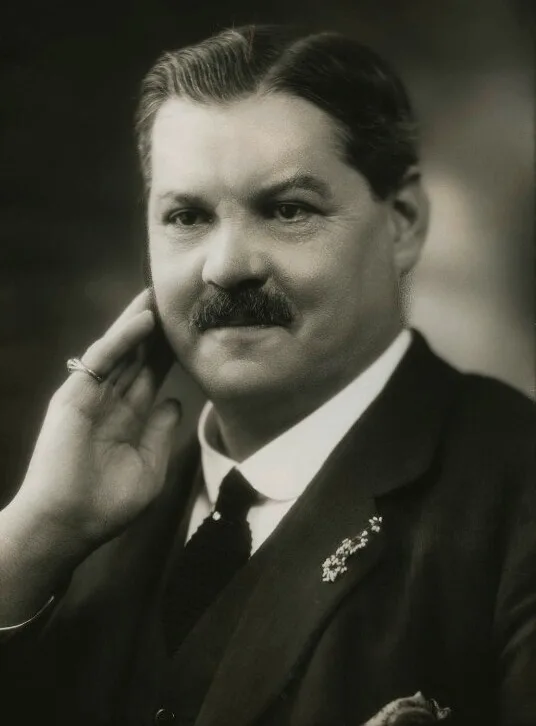
At the top of a South Wales pit shaft, a checkweighman stood beside the coal tubs and recorded what each miner had cut. It was a post that depended on trust, and it was one of the first places where David Watts Morgan became known to the men of the Rhondda. He went on to serve as a union agent, a county councillor, an army officer and a Member of Parliament.
This article follows his path from the pit to Westminster. It also looks at why historians have found him hard to place in the story of Welsh politics.
A Boyhood in Skewen
David Watts Morgan was born in Skewen on 18 December 1867, the son of Thomas and Margaret Morgan. He attended the local elementary school until he was eleven. He then went to work as a pit boy, helping the miners with lighter jobs such as minding the ventilation doors.
By seventeen he was working as a coal miner at Ynyshir in the Rhondda. He later became a checkweighman at the National Colliery in Wattstown, where he tallied the coal each miner sent to the surface. He studied mining engineering at evening classes. He never worked as an engineer, but the training helped him when he led mine rescues, and it gave him a practical grasp of the industry that shaped his later politics.
Agent and Councillor
In 1898 Watts Morgan became a district miners' agent and joined the Rhondda Labour and Liberal Association. He followed the Liberal outlook of William "Mabon" Abraham, the dominant figure among Rhondda miners, and he spoke regularly at the association's meetings and dinners.
His early bid for office did not go smoothly. In 1899 he stood in a by-election for the Porth and Cymmer seat on Glamorgan County Council and lost to a local timber merchant, David Jenkins. The following year the miners' district committee refused him time away from his agent's duties, so he did not stand. A colleague, James Baker, won the seat unopposed. When Baker died in 1902, Watts Morgan was allowed to stand as a Labour candidate and was returned without a contest.
He joined the South Wales Miners' Federation when it was founded and pressed for the organisation to take a bigger part in politics. By 1908 he was Agent and District Secretary for the No.1 Rhondda District, working under Abraham.
A Moderate in Turbulent Years
Watts Morgan was a moderate. During the 1910–11 Cambrian Combine dispute, he and Abraham tried to bring about a settlement. They were shunned by the more radical miners' leaders, and their efforts came to nothing.
His views did not fit neatly into one camp. He still held to Gladstonian Liberalism and opposed the Miners' Federation of Great Britain affiliating to the Labour Party. Yet he also joined the Marxist Plebs' League and served as a governor of the Central Labour College. The Oxford Dictionary of National Biography sums him up as a figure who bridged the shift from Lib-Labism to socialism without fully representing either.
Recruiter and Officer
He enlisted as a private in the 10th (1st Rhondda) Battalion of the Welsh Regiment on 4 August 1914, the day Britain declared War on Germany. The battalion was one of the service units raised as part of Kitchener's Army. On 7 October he was commissioned as a lieutenant in the 17th (1st Glamorgan) Battalion, and he became a captain on 16 January 1916.
He was not sent to France at first. Instead he became a prominent voice in recruiting, both in the Rhondda and in North Wales, where his fluency in Welsh was a real asset. In March 1915 a committee of Rhondda figures gave him a cheque for 100 guineas in recognition of his work, and the Western Mail called him "The Organiser of Victory". His recruiting efforts later brought him an appointment as a Commander of the Order of the British Empire.
On 15 May 1916 he transferred to a Works Battalion of the King's Liverpool Regiment. He later rose to lieutenant-colonel in the Labour Corps. He won the Distinguished Service Order for his bravery at the Battle of Cambrai in 1917. With CBE, DSO and JP after his name, he became known in South Wales as "Dai Alphabet". His army service ended in 1919.
Member for Rhondda East
In February 1918 Watts Morgan was chosen as the Labour candidate for the new Rhondda East constituency. He was returned unopposed at the general election later that year. He held the seat at every election after that, and the contests in 1924 was also unopposed. Later in life he hyphenated his surname to Watts-Morgan.
His majorities were not always large. In 1922 he beat a National Liberal candidate, taking 55 per cent of the vote. In 1923 his share rose to just under 72 per cent against a Unionist. In his last election, in 1931, he faced the Communist Arthur Horner and won with a little over 68 per cent in a two-way contest. The result showed how much support Labour had in the Rhondda, even as the Communist challenge grew in the valleys.
David Watts Morgan died in Porth on 23 February 1933, aged 65, while still the sitting member. William Mainwaring succeeded him at the by-election that followed.
A Career Between Two Eras
Watts Morgan's life ran from the pit-boy days of the 1870s to the depression years of the early 1930s. He moved from union office to local government, then to military service and Parliament, in a period when the Rhondda coalfield was at its height and then began to struggle. He did not belong wholly to the older Liberal tradition or to the newer socialist one, and that is what makes him interesting to historians. His career shows how many working men of the coalfield took a gradual path from Liberalism to Labour, rather than a sudden break.