
Down the Pit, Up the Touchline: Ivor Powell, MBE
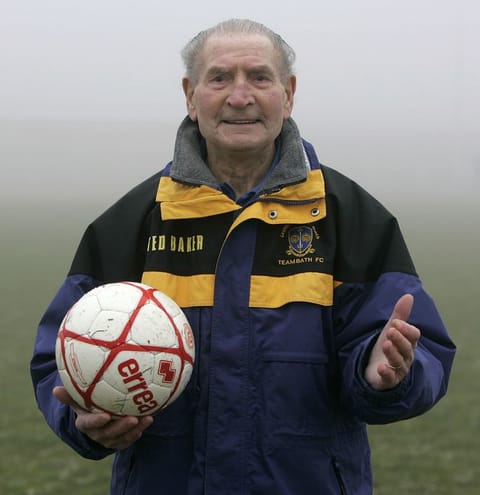
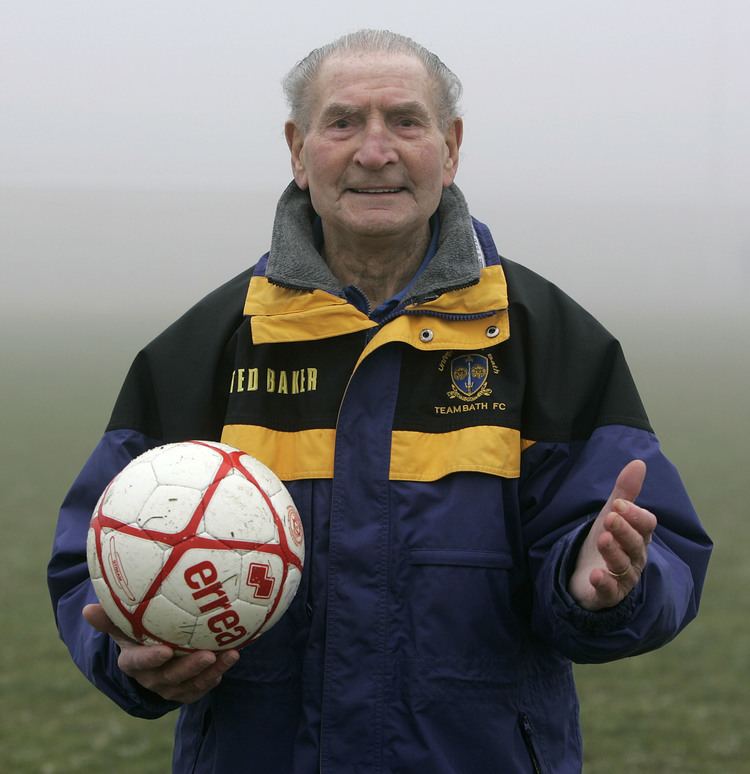
On a training pitch at the University of Bath, a man in his nineties stands with his hands in his pockets, watching students run through their drills. He has been coaching football for more than half a century. He began his working life more than seventy years earlier, underground in a Welsh coal mine. This is Ivor Powell, one of the longest-serving figures in British football.
Today, we follow his path from the valleys of Gwent to the dressing rooms of England and Greece, and back to a university campus in Somerset.
A Miner's Son from Bargoed
Ivor Verdun Powell was born in Bargoed on 5 July 1916. He was the seventh son of a seventh son, a detail he was fond of recalling. He started work in the pit alongside his father and six brothers, earning two shillings a day. Football was the way out, and he played for the local side Bargoed Thursdays.
In August 1936 he was invited to London for a trial with Queens Park Rangers. It did not lead to a contract, but he decided to stay in the capital and found a job. He turned out for the reserves of Barnet. In May 1937 he played well in a friendly against QPR, and Barnet won 8-1. That performance caught the Rangers' attention.
Rangers, the War and a Famous Best Man
Powell signed professional forms with QPR in September 1937, under the manager Billy Birrell. He played as a left-half, one of the wing halves who linked defence and attack. The Second World War interrupted his career just as it was taking shape. He served as a physical trainer in the RAF and played as a guest for Bradford City and Blackpool.
At Blackpool he became friends with Stanley Matthews. Matthews was his best man when he married Joan Browell in 1943.
After the war Powell returned to Loftus Road. QPR finished second in the Third Division South in 1946-47, which was not enough for promotion, as only the champions went up. A year later, under Dave Mangnall, they won the title and reached the Second Division. Powell also won eight caps for Wales between 1946 and 1950.
Villa and the Move into Management
In December 1948 Powell joined Aston Villa for £17,500 and went on to make 79 First Division appearances. A knee injury eventually forced him down a level. In August 1951, aged 35, he became player-manager of Port Vale. The spell lasted only four months, and he left with the club at the bottom of the Third Division South.
After a short stay with Barry Town, he took over as player-manager of Bradford City in June 1952. The results were poor, and he departed in February 1955. In 1956 he joined Leeds United as a trainer-coach and spent four years there. Among those he worked with were Don Revie, Jack Charlton and Billy Bremner, all still to make their names in management and on the international stage.
Success at Carlisle and Journeys Further Afield
His best spell as a manager came at Carlisle United, where he arrived in 1960. In 1961-62 the club won promotion from the Fourth Division. He left in 1963, and in 1964 he took charge of the Southern League side Bath City, staying until 1967. In 1968 he spent a brief period coaching the Greek club PAOK.
Those early managerial posts were often short, and the results were mixed. Powell's reputation was built on something different, and it came later.
The Professor of the Touchline
In 1973 Powell began coaching at the University of Bath. He stayed for almost forty years, working with students and with the Team Bath side, and he eventually became club president. He had a five-point creed for success: aggression, determination, the will to win, industry and consistency. The university awarded him an honorary MA in 1993.
Honours followed in his later years. He entered the Welsh Sports Hall of Fame in 2004, alongside the snooker player Terry Griffiths and the cricketer Tony Lewis. On his 90th birthday in 2006 he was recorded by Guinness as the world's oldest working football coach, after some 55 years in the job. He received the MBE in 2008.
Powell retired on 26 May 2010, aged 93. The university marked the occasion by launching the Ivor Powell Sports Scholarship Fund, and he carried on helping with its sport on a voluntary basis. He died in November 2012, aged 96. His son Barry Powell also became a professional footballer.
A Legacy Measured in Decades
Powell never became a household name in the way his friend Matthews did, and his managerial record was uneven. His lasting achievement was endurance, together with the way he used it. A boy who left the coal face in the 1930s was still teaching the game to new generations of students in the 2000s. In Bargoed, and at Bath, he is remembered for that long career as much as for any trophy.