
Christmas Eve at the Cap: The Story of Capitol Theatre, Cardiff
On Christmas Eve 1921, the east end of Queen Street in Cardiff had a new landmark to show off. Inside, film-goers settled into thousands of seats to watch a British comedy called Nothing Else Matters. The Capitol was by then one of the largest cinemas anyone in Britain had seen. In the decades that followed it also became one of the biggest stages in Wales.
Today the Capitol is gone, but the story of how it rose, thrived and fell says a good deal about how Cardiff entertained itself through the 20th century.
A Cinema Built to Impress
The Capitol was built between 1919 and 1921 on a site that had previously held an earlier cine-variety venue. The designers were the architects Phillips and Wride. The building was the flagship of the Tilney family, whose Tilney Kinema Company ran a chain of early cinemas across South Wales.
Its scale was the point. The auditorium held 3,158 people across the stalls, circle and balcony. At the time that made it the largest purpose-built cinema in Europe. Films were the main draw, but the building was always meant to stage live performances too.
More Than a Picture House
The Capitol was a day out under one roof. Alongside the main auditorium it housed:
- a ballroom
- three restaurants
- a bar
- a banqueting hall
- a games hall
For a city still finding its feet after the First World War, this was ambitious. Cardiff's cinema-goers could watch a film, dine and dance without leaving the building. Many locals knew it affectionately as the Cap.
New Owners, New Eras
The Tilney Kinema Company owned the Capitol at first. In 1931 the building was leased to Paramount Cinemas. A decade later, in 1941, the Rank Organisation took over the lease. In 1964 Rank bought the building outright.
Rank then carried out major renovation work. One consequence was a smaller auditorium, with seating reduced to around 2,500. The change reflected a shifting business. Cinema was no longer enough to fill such a large building, and live music was increasingly part of the programme.
Nights of Noise on Queen Street
From the mid-1960s the Capitol became one of the most important touring stops in Wales. Its stage saw an impressive roll call of performers, including Tom Jones, Shirley Bassey, Queen, Led Zeppelin, Elton John, Rod Stewart, T.Rex and Bob Dylan.
The Beatles and the Rolling Stones
The most famous night came on 12 December 1965. The Beatles ended their last UK concert tour with two performances at the Capitol. Less than a year later, on 8 October 1966, the Rolling Stones played the venue. Ike and Tina Turner and the Yardbirds appeared on the same bill.
Later Years
Chuck Berry appeared on 9 June 1970, supported by Shakin' Stevens and the Sunsets and the Wild Angels. On 7 September 1975 Santana played the Capitol. Those were the band's only shows in Wales.
Closure and Demolition
By the late 1970s, audiences were drifting towards smaller cinemas. Large music acts, meanwhile, could draw crowds that needed bigger arenas. The Capitol was caught between the two trends. Rank closed it on 21 January 1978, just over fifty-six years after its opening night.
The empty building stood for several years before it was pulled down in 1983. Its loss is still mourned by those who remember the big screen and the concert nights.
The Site and the Memory Today
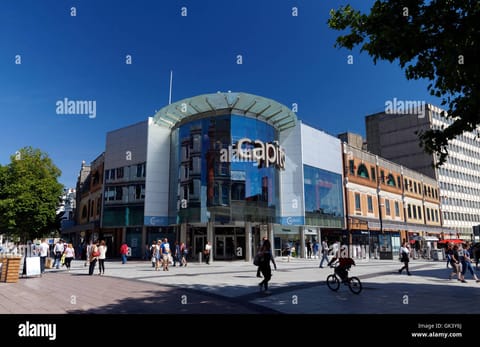
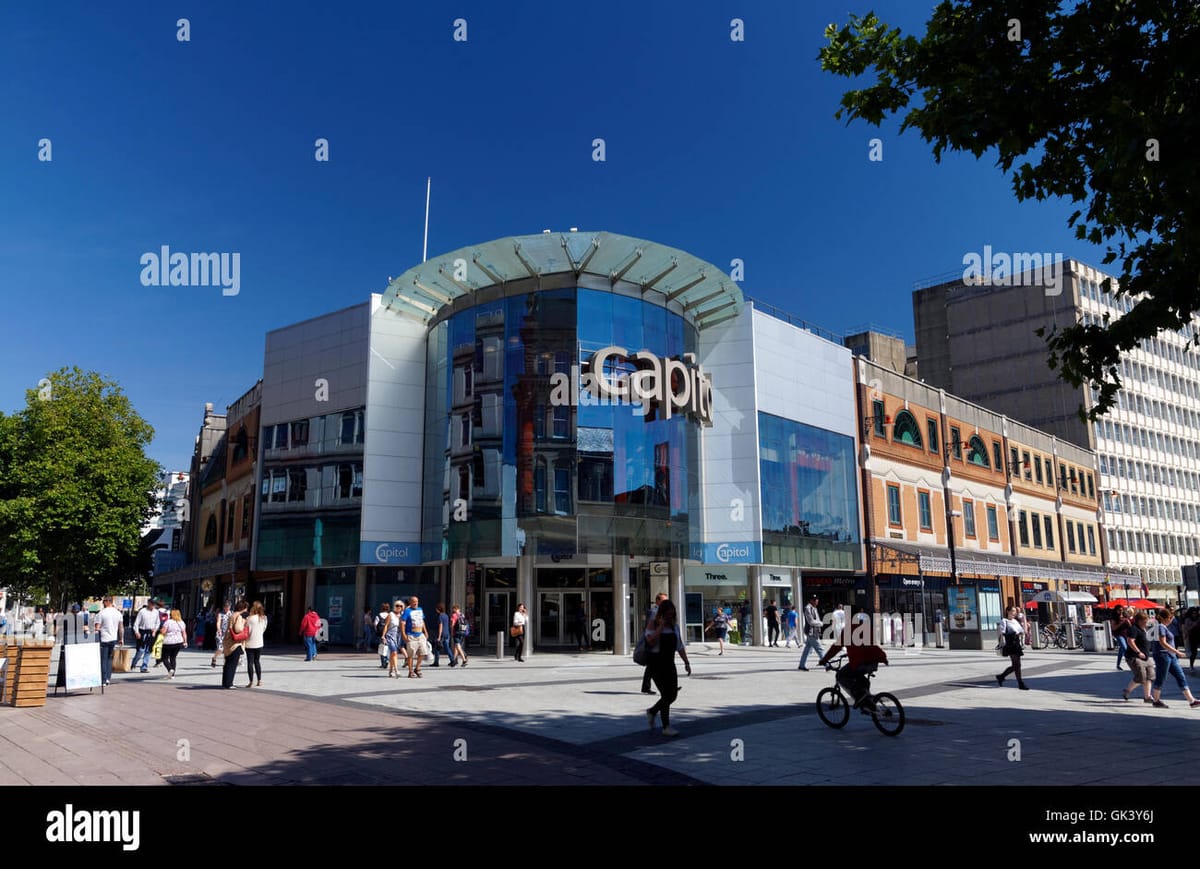
The Capitol Centre now occupies the site at the eastern end of Queen Street, close to Cardiff Queen Street station. It is an indoor shopping centre, and it opened at the start of the 1990s as the Capitol Exchange. The complex originally included a five-screen Odeon cinema, which closed in 2001. The new building made some attempt to echo the look of the original.
The old theatre's legacy lives on in memory and in music history. For a few decades the Capitol was where Cardiff came to watch films and see some of the biggest names in popular music. The pop-music world also came to Cardiff to play there. The name survives on the shopping centre, a reminder of the vast building that once stood on the same ground.