
Forty-Seven Days Under Siege: Vicksburg National Military Park
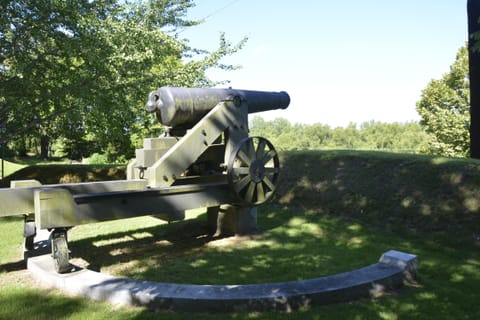
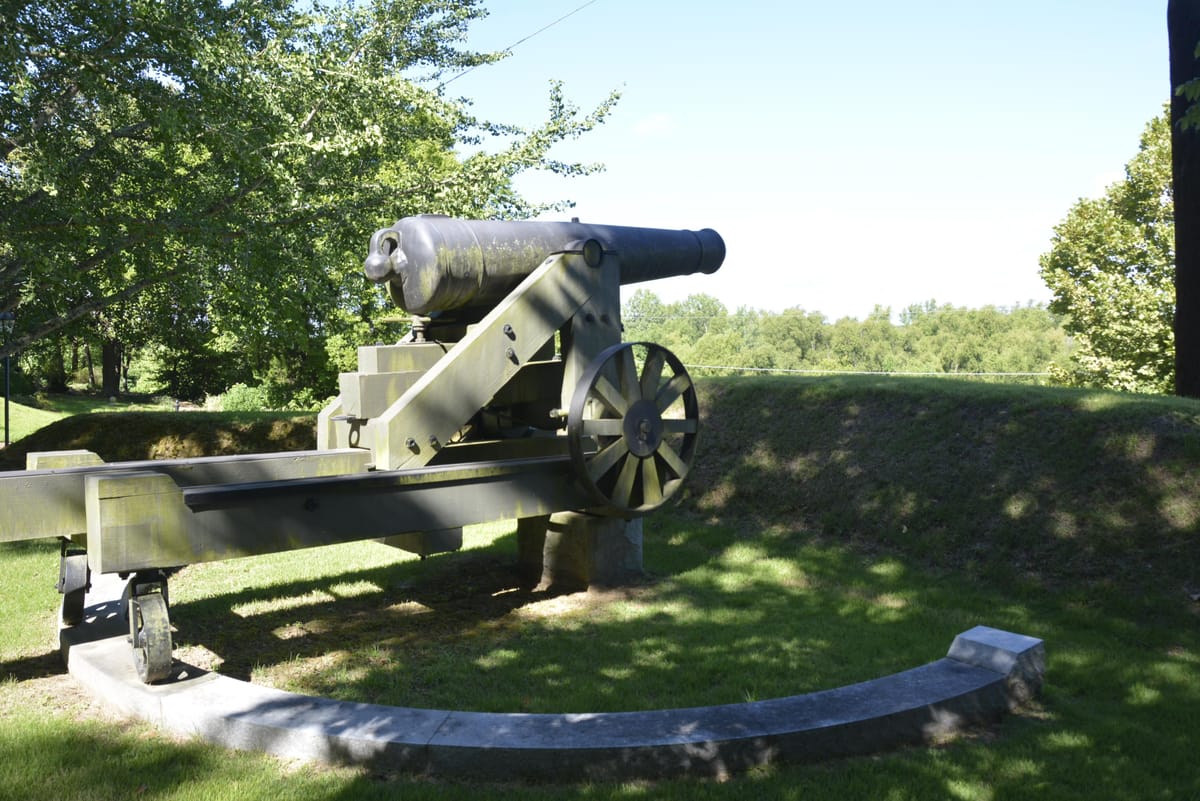
Follow the winding tour road across the wooded ridges east of the Mississippi River and the land begins to show its shape. Steep ravines fall away on either side, and grassed-over trenches trace the old lines. Cannon still point across fields that were once cleared for fire. This is Vicksburg National Military Park, where in the summer of 1863 a Confederate army and a city's civilians endured one of the longest sieges of the American Civil War.
Today the park covers 2,524 acres, and it rewards a slow visit. Here is how a high bluff above the river became a battlefield, and then a memorial.
The River Fortress
Vicksburg mattered because of where it stood. Its bluffs commanded a bend in the Mississippi, and Confederate guns there could stop Union shipping on the river. For the North, controlling the whole length of the Mississippi would split the Confederacy in two, so Vicksburg became a major target.
The early attempts to take it were ingenious but unsuccessful. One was Grant's Canal, a plan to cut a new channel across the peninsula opposite the city so that ships could bypass the guns. Work began in June 1862 under Major General Benjamin Butler, with Brigadier General Thomas Williams in charge. It was abandoned that July after heavy sickness among the soldiers and the formerly enslaved labourers digging the ditch, and as the river fell. Ulysses S. Grant restarted the project in January 1863, with William T. Sherman overseeing it. Neither man expected it to work, and it did not, though it kept Grant's troops busy while he planned a different approach. The canal remains are a detached part of the park, near Delta, Louisiana.
Forty-Seven Days
Grant's real answer was a swift campaign of movement. In the spring of 1863 his army crossed the river south of Vicksburg and fought its way inland through a string of engagements: Port Gibson on 1 May, Raymond on 12 May, Jackson on 14 May, Champion Hill on 16 May and Big Black River Bridge on 17 May. Each defeat pushed the Confederate defenders, under Lieutenant General John C. Pemberton, back towards the city's fortifications.
The siege proper began on 18 May. Union assaults on the Confederate works failed with heavy losses, so Grant settled into a methodical encirclement. Trenches crept towards the Confederate lines, and the defenders' supplies dwindled. Many of Vicksburg's civilians took shelter in caves dug into the hillsides, while shells fell on the town from land and river. After 47 days Pemberton surrendered on 4 July 1863. Port Hudson, farther south in Louisiana, fell shortly afterwards, and together the two victories gave the Union command of the Mississippi.
From Battlefield to Park
The dead were gathered quickly. Vicksburg National Cemetery lies within the park and holds 18,244 interments, of which 12,954 are unidentified. Burials for the Civil War took place between 1866 and 1874, and the cemetery is now closed to new interments. It also holds a single Commonwealth war grave, that of an Australian airman from the Second World War.
Congress established the national military park on 21 February 1899, with the aim of commemorating the siege and defence of Vicksburg. Veterans from both sides helped to mark where regiments had stood, and states raised monuments across the ground. The park and cemetery stayed under the War Department until 10 August 1933, when they passed to the National Park Service.
The Park Today
A 16-mile tour road links the main points of the battlefield, and a 12.5-mile walking trail offers a slower alternative. The park contains:
- 1,325 monuments and markers
- 20 miles of historic trenches and earthworks
- 144 emplaced cannon
- two antebellum homes
- reconstructed forts and trench lines
Among the memorials, the Illinois Memorial is the one many visitors remember. It has 47 steps, one for each day of the siege.
The park's other great attraction is the USS Cairo. This Union gunboat, known as the Hardluck Ironclad, was sunk on 12 December 1862 on the Yazoo River and is regarded as the first ship in history to be sunk by an electrically detonated torpedo. It was raised in 1964, and the restored vessel is displayed in the park. The park received about 410,300 visits in 2025, and it remains on the National Register of Historic Places, listed since 15 October 1966.
A Lasting Legacy
Vicksburg is remembered as a turning point in the Civil War, and the park keeps that history physical and walkable. The trenches show how the siege worked, the monuments show how the nation chose to remember it, and the cemetery's many unnamed graves show what it cost. A visit rewards patience, and it explains clearly why a city on a river bluff decided so much.