
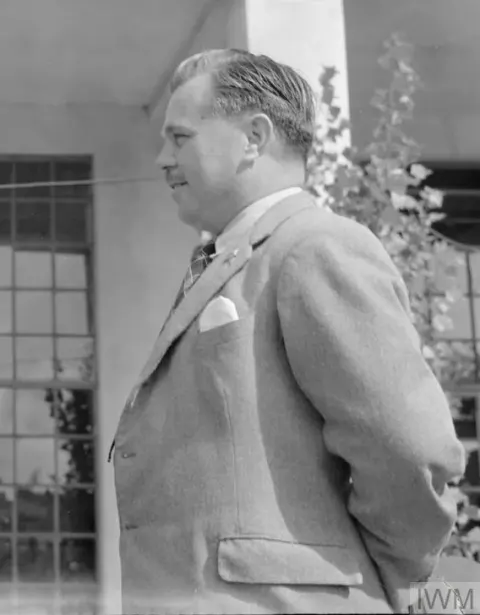
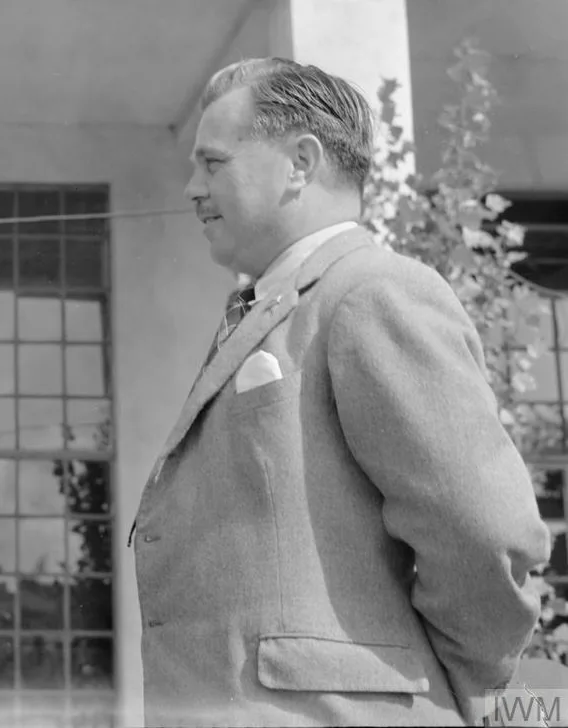
Redcoats and Chalets: The Life of Billy Butlin
On a summer day in the late 1930s, a coach pulls up at the gates of a camp on the Lincolnshire coast. The guests step down with their suitcases, a little unsure of what a holiday in a field of chalets might involve. Within a week many will be playing games, dancing in a ballroom and queuing for a swimming pool. The man who planned it all began adult life with almost nothing. Sir William Butlin, always known as Billy, helped change how millions of ordinary Britons spent their time off.
This is his story, from the fairground gingerbread stall to the seaside empire that carried his name.
A Childhood on the Move
William Heygate Edmund Colborne Butlin was born on 29 September 1899 in the Cape Colony, in what is now South Africa. His father, the son of a clergyman, ran a bicycle shop. His mother, Bertha, came from a family of travelling showmen. The marriage did not last. Bertha took her sons back to England, where Butlin's younger brother died of polio.
Butlin spent several years following his grandmother's family fair around the country, where his mother sold gingerbread. It was an unusual schooling, but it taught him how crowds behave and what they will pay for. Around 1910 his mother left for Canada, and he followed a few years later. He found school in Toronto unhappy. He was mocked for his English accent and left at fourteen to work as a messenger at Eaton's department store.
Eaton's ran a summer camp for its staff, and Butlin later remembered it as his first real holiday. The idea stayed with him. In 1915 he joined the Canadian Army and served with the Canadian Expeditionary Force on the Western Front.
Five Pounds and a Stall
After the First World War Butlin returned to England with about £5. He spent £4 of it on a stall at his uncle's travelling fair. His method was simple: he gave customers a better chance of winning, and more of them came. One stall became several, including a pitch at Olympia in London. He soon bought more equipment and started his own travelling fair. The 1921 census records him in Avonmouth, Bristol, as an amusement caterer working on his own account.
By 1927 he had opened a permanent fairground at Skegness. The town was a popular resort, but Butlin noticed that visitors came for the day and then went home. If he could offer somewhere to stay, they would spend more time, and more money, on his site.
The First Holiday Camps
Butlin opened his first holiday camp at Skegness in 1936. Holiday camps were not new, and Warner's, among others, had already been operating. Butlin's contribution was scale and showmanship. He offered a week's accommodation, meals and entertainment for one price, and he promoted it relentlessly. In 1937 he turned the business into a limited company, and the share offering sold out within days.
The camp's famous staff came from an early problem. Guests seemed shy and unsure how to take part, so Butlin asked Norman Bradford, an engineer working on the construction, to help break the ice. Bradford became the first of the Redcoats, and the red blazer became the uniform of the friendly, always-available host. A second camp followed at Clacton in 1938, and plans for a third at Filey were interrupted by the Second World War.
War and Expansion
Butlin turned the war to his advantage. The Ministry of Defence completed the Filey camp and built two more, at Ayr and Pwllheli, for use as training establishments. Butlin took them back once peace returned. He received an MBE in 1944 for wartime service. After the war he opened further camps at Mosney, Bognor Regis, Minehead and Barry Island. He also bought hotels in Blackpool, Saltdean and Cliftonville.
Honours and Charity
By the 1950s and 1960s a Butlin's week was a fixture of British summers. Butlin took a close interest in charity work. He belonged to the Variety Club of Great Britain and the Grand Order of Water Rats, and he established a charitable trust in his own name. He also set up a fund to help police officers hurt or killed on duty. He was knighted in 1964.
His private life was more complicated. He married three times: Dorothy Cheriton in 1925, Norah Faith Cheriton in 1958 and Sheila Devine in 1975. His son Robert, known as Bobby, took over the running of the company in 1968.
Retirement and Sale
Butlin withdrew from daily management at the end of the 1960s. A takeover attempt in 1969 briefly brought him back as a consultant, and with his help Bobby saw it off. In 1972 the Rank Organisation bought the business for £43 million, a sale both father and son accepted. Butlin settled at Blair Adam House in the parish of St John, Jersey, and lived there until his death on 12 June 1980, aged 80.
The business he left behind faced a changing market. The number of camps peaked at ten between 1966 and 1980, but cheap package holidays to the Mediterranean drew families abroad. Butlin's also acquired a reputation for regimented holidays, and the name was largely dropped at the remaining resorts between 1987 and 1990. It was later revived. Since 2000 the brand has been owned by Bourne Leisure.
A Name That Stayed
Butlin did not invent the holiday camp, but he made it a national institution. His camps offered a first proper holiday to many families who could not otherwise have afforded one. Redcoats, ballrooms and chalets became part of British memory, remembered fondly by some and teased by others. The resorts at Skegness, Minehead and Bognor Regis still bear his name, a lasting reminder of a showman who understood what people wanted from a week by the sea.