
Hope and Saint Barbara: The Story of Fell Exhibition Slate Mine
Step out of the daylight in the Nossern Valley and the air changes at once. It turns cool and damp, and the dark stone seems to close in around you. A short walk inside, the tunnel opens into a tall chamber cut from the hillside by hand. Here, men once split slate for the roofs of Germany. This is the Fell Exhibition Slate Mine, known in German as Besucherbergwerk Fell and also as the Barbara-Hoffnung Exhibition Mine.
It lies in Rhineland-Palatinate, about 20 kilometres east of Trier, between the villages of Fell and Thomm. Let us follow the story of how a pair of working mines became a place to learn about a vanished trade.
Slate in the Nossern Valley
The slate beneath this part of western Germany was valued as roofing stone. Quarrying and mining it shaped village life for generations. At Fell and Thomm, the industry left a landscape of terraced spoil heaps, mine entrances and old haulage routes. Much of it has since been softened by vegetation.
The mine as visitors know it is really two mines, built to the same pattern. Both are typical roof slate workings, in which miners followed the seam underground and left great chambers behind them.
Two Mines, One Hillside
The two workings sit one above the other. The upper one, called Hoffnung, meaning "Hope", appears in documents as early as 1850. The lower, Barbara, is first recorded in 1908. Barbara takes her name from the patron saint of miners, whom workers in underground trades have long invoked for protection.
For most of their working lives the two mines operated separately. Today a stairwell about 100 metres long links them. The sloped connection was driven from the Barbara stoping level and emerges in the fourth chamber of Hoffnung. For visitors, this turns two separate histories into a single underground route.
Shelter in Troubled Years
The mines were not only places of work. In the years of war, local people used them as bunkers and, for a time, as homes. Memories of that period are still kept alive in Fell and Thomm. Former miners and eyewitnesses share them during special candlelit events inside the mine. The tunnels therefore hold two stories: the hard labour of slate-getting, and the ordinary lives that depended on the same dark space for safety.
From Abandoned Workings to Exhibition Mine
Restoration began in 1994. The community of Fell led the project and drew on public support, including grants from the European Community. Volunteers and local backers worked to make the old galleries safe and understandable to visitors.
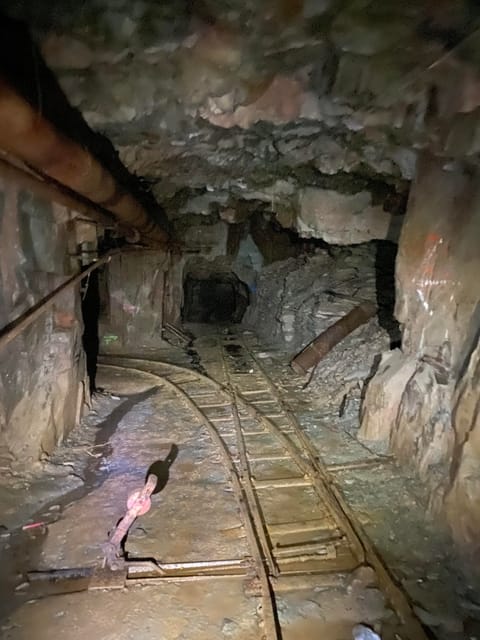
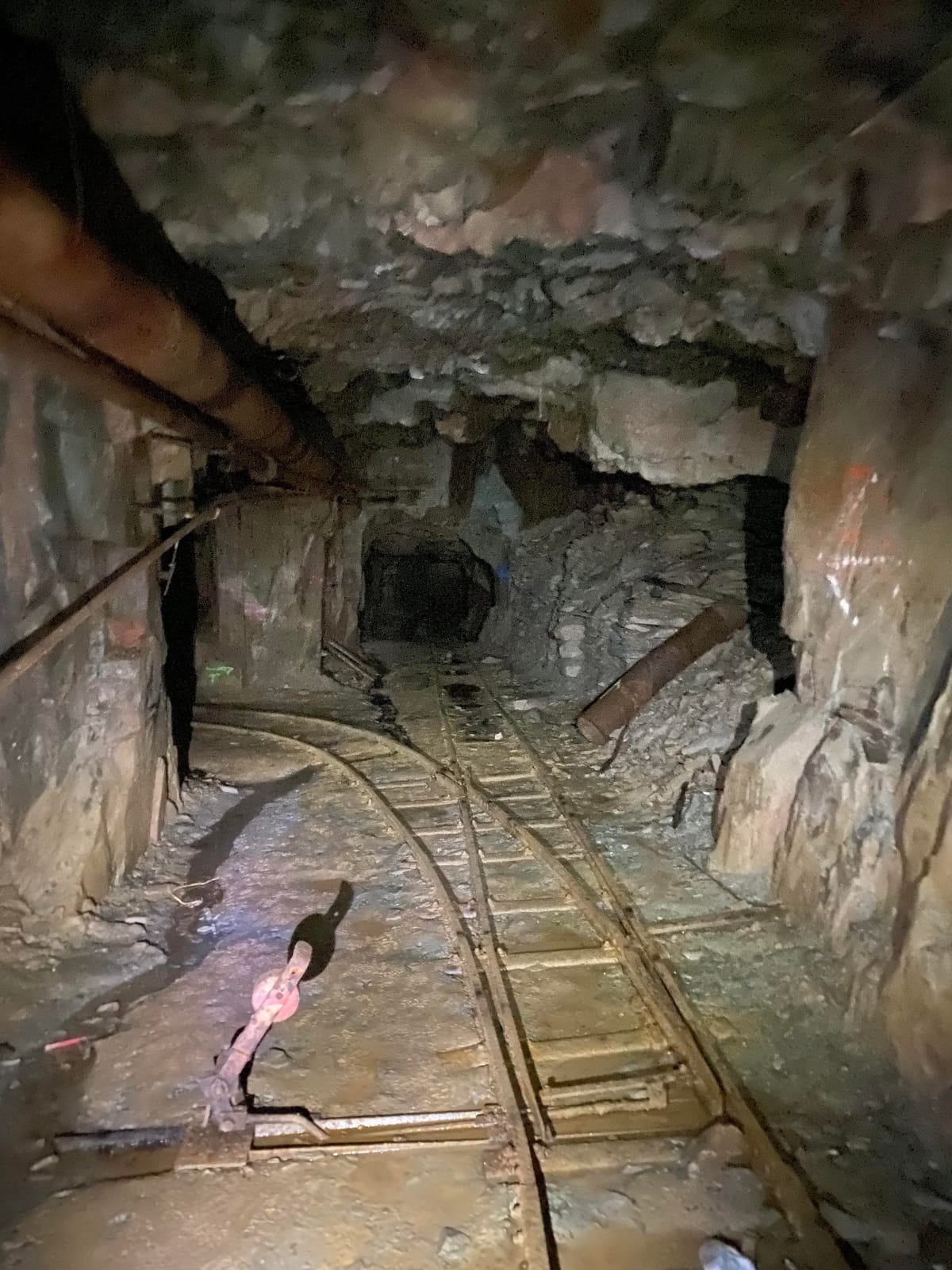
The exhibition mine opened to the public in 1997. Visitors can walk through tunnels and drifts and see large chambers, chutes and pack walls. Pack walls are the stacked waste stone that miners built to fill worked-out space. Figures placed along the route show the labour of slate miners and the danger that came with it.
Visiting today
The mine is open every day from April to October. Parts of the underground area have also been used for training by firefighters, a reminder that the tunnels remain a useful space as well as a heritage attraction.
The Slate Mining Trail and the Museum
Outside, a slate mining trail runs through the Nossern Valley. Along it are the signs of former workings: terraced dumps, old mine cars, former slate-carrying paths and entrances now almost swallowed by greenery. The trail is laid out so that walkers can choose a route to suit their interests and fitness.
At the entrances to the mines stand ten information boards, each with its own slate roof. The Rathscheck Schieferbergbau company of Mayen donated and fitted the roofs. The boards carry mine plans and notes on the history of each system, so visitors can grasp how large and intricate the workings were.
Beside the exhibition mine, a small documentation centre called "Mine and Wine" displays rare tools from slate mining and wine-making. A continuous film shows modern slate mining in Europe, set in the Rathscheck mine near Mayen. A statue of Saint Barbara dated 1897 is also on display.
Traditions That Outlived the Trade
The mining tradition is carried on above all by two miners' bands, the Fell Miners' Band and the Glück-Auf Thomm Miners' Band. Both were established in 1955, though their roots can be traced back to 1871. Every year, on the second Sunday in Advent, which follows the feast day of Saint Barbara on 4 December, the Fell band leads a traditional miners' parade, the Bergparade.
Every two years in the run-up to Christmas, the Friends of the Exhibition Mine hold a Mettenschicht, a form of matins, underground for their members. Participants go down by the light of candles and pit lamps alone. Along the way, former miners describe their work, and there are music, prayers and poems in honour of Saint Barbara.
A Legacy Kept in Stone
Fell no longer earns its living from slate, but the mine has found a second purpose. It keeps the memory of a local trade, a wartime refuge and a community's determination to look after its past. A visit takes in the cold chambers, the wooded valley and the village traditions. Together they explain why the slate roofs of this region were worth such effort.