
Barbed Wire Across a Continent: The Nazi Camp System
Many visitors to a former camp begin with a stretch of gravel, a gatehouse and a long, level horizon. The ground looks ordinary. Yet between 1933 and 1945 the Nazi regime and its allies built a network of camps across Europe that held millions of people and killed a great many of them. This article sets out the main sites and explains how the different kinds of camp worked.
One System, Many Kinds of Camp
The phrase "concentration camp" covers several different institutions, and historians separate them carefully. The first were prisons for political opponents. Later came forced-labour camps, transit camps, prisoner-of-war camps and, from 1941, purpose-built killing centres. Some places combined several functions.
The scale is difficult to grasp. Researchers have identified tens of thousands of sites once subcamps, ghettos, labour camps and others are counted. The sites named here are only the best known.
1933: The First Camps
Within weeks of Hitler becoming Chancellor in January 1933, makeshift camps appeared across Germany. They held Communists, Social Democrats, trade unionists and other critics. Many were improvised in factories, barracks and cellars, and most closed within a year or two.
Dachau, near Munich, opened on 22 March 1933 and lasted until the end of the war. Under SS chief Heinrich Himmler it became the template for later camps, with its regulations, guard training and layout copied elsewhere. Other early sites included Oranienburg, Esterwegen and Lichtenburg.
The Core Camps of Germany and Austria
From 1936 the SS built larger, permanent camps, usually beside quarries, brickworks or armaments factories. The main ones were:
- Sachsenhausen, near Berlin, opened in 1936.
- Buchenwald, on a hill above Weimar, opened in 1937.
- Flossenbürg, in the Bavarian uplands, opened in 1938.
- Mauthausen, near Linz in Austria, opened in 1938 after the Anschluss and was known for its granite quarry.
- Neuengamme, near Hamburg, which became a camp in its own right in 1940.
- Ravensbrück, north of Berlin, opened in 1939 mainly for women.
- Mittelbau-Dora, in the Harz Mountains, where prisoners dug tunnels to build V-2 rockets from 1943.
Camps in Occupied Europe
As German armies advanced, the system spread. Gross-Rosen in Silesia opened in 1940, and Stutthof, near Danzig, took its first prisoners in 1939. Natzweiler-Struthof, in the Vosges, was the main SS camp on what is now French soil. Bergen-Belsen, in Lower Saxony, began as a prisoner-of-war camp and later held thousands of people in catastrophic conditions.
Transit and Detention Sites
Several camps served as waiting places before deportation east. These included Drancy in France, Westerbork in the Netherlands, Breendonk in Belgium and Fossoli in Italy. Theresienstadt, in Bohemia, was a fortress town used as a ghetto and transit camp. In Croatia, the Jasenovac complex was run by the Ustaše regime rather than the SS.
The Extermination Camps
The killing centres were built in occupied Poland for one main purpose: the mass murder of Jews and others. Chełmno began operating in December 1941. Three more, Bełżec, Sobibór and Treblinka, were set up under Operation Reinhard and killed most of their victims on arrival, so few survivors remained.
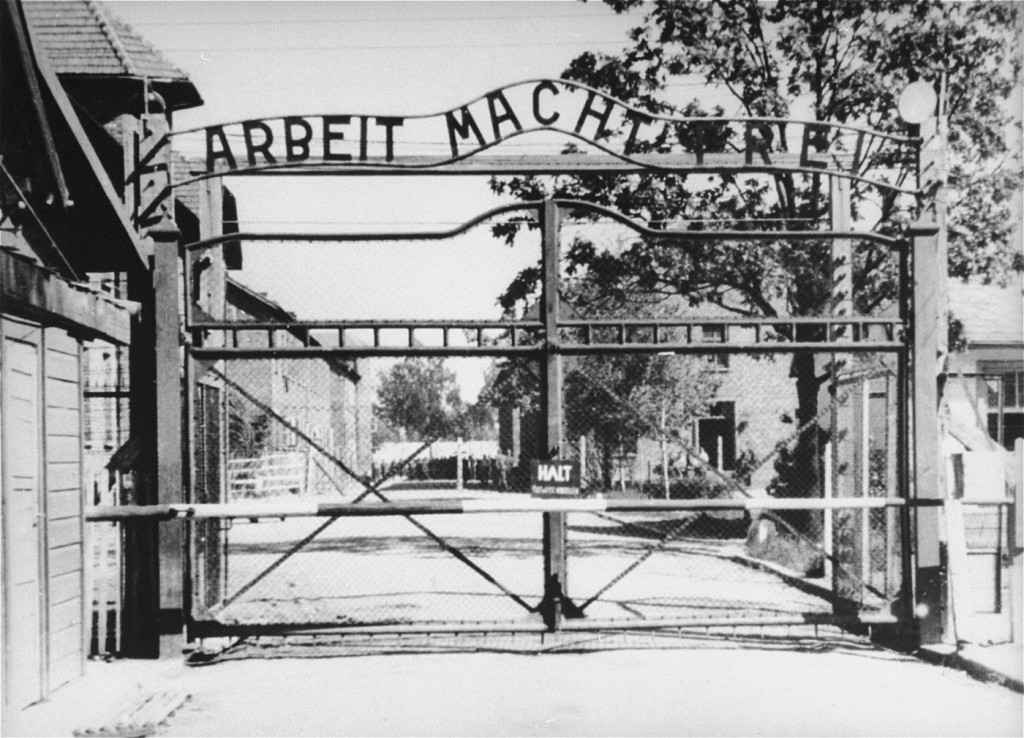
Auschwitz began in 1940 as a camp for Polish political prisoners. It grew into a vast complex that included Auschwitz I, the killing centre at Birkenau and the labour camp at Monowitz. Around a million Jews were murdered there, along with Poles, Roma and Sinti, Soviet prisoners of war and others. Majdanek, near Lublin, combined labour and killing functions.
Liberation and Remembrance
Soviet troops reached Majdanek in July 1944 and Auschwitz on 27 January 1945, a date now observed as International Holocaust Remembrance Day. American forces freed Buchenwald on 11 April and Dachau on 29 April 1945. British troops entered Bergen-Belsen on 15 April, and their film footage shocked the world.
Today, most of the principal sites are memorials with museums, archives and education programmes. At Dachau, Buchenwald, Sachsenhausen and Auschwitz-Birkenau the surviving buildings, foundations and ruins are preserved as evidence. Treblinka, Bełżec and Sobibór are marked mainly by monuments, because the SS destroyed the camps before retreating.
Visitors should expect a sombre experience, and many sites ask for quiet and respectful dress. Their lasting purpose is to document what happened, honour the victims and make denial harder.