
Down Into the Dark: The Story of Harrison's Cave, Barbados
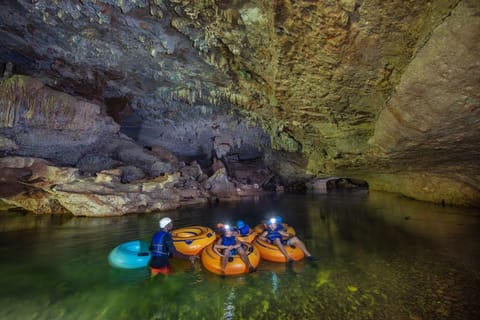
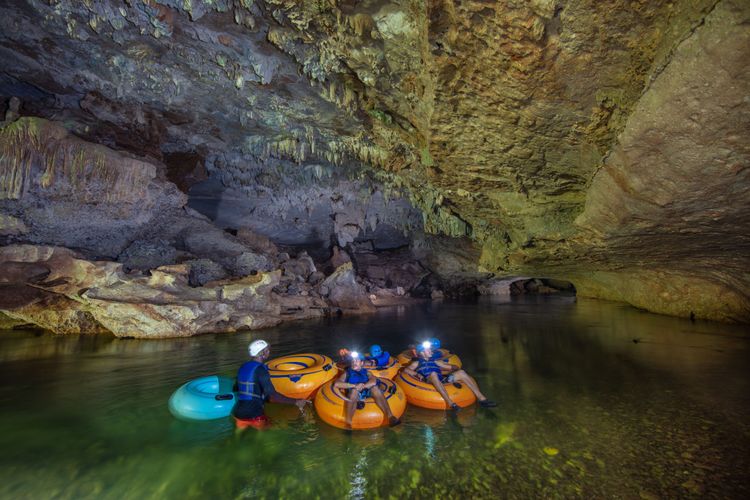
The tram slips out of daylight and into a tunnel, and the temperature settles into a steady, cool dampness. Ahead, lamps pick out pale curtains of stone, a stream running over its rocky bed and a roof hung with slender points of calcite. Few visitors to Barbados expect to spend part of their holiday beneath the ground, yet Harrison's Cave has been among the Island's best-known attractions for more than forty years.
Come with us below the hillside to see how this cave formed, how it was explored and how it came to be shared with the public.
A Cave Made by Water
Barbados is not volcanic. Much of the Island is capped with coral limestone, a soft, porous rock laid down over a vast span of time. Rainwater, slightly acidic as it soaks through soil and vegetation, slowly dissolves that rock and finds its way underground. Over hundreds of thousands of years this process hollowed out passages, chambers and sinkholes in the central uplands.
Harrison's Cave is the finest example of the result. It is an active stream cave, which means water still runs through it and the formations are still growing, though by amounts too small to see. Water rich in dissolved calcium drips from the roof and leaves behind stalactites, while stalagmites rise to meet them from the floor. Among Caribbean caves it is notable for the length of its system, which is usually given as at least 2.3 kilometres.
A Name and an Early Mystery
The cave takes its name from Thomas Harrison, an eighteenth-century landowner whose estate included the ground above it. He is also remembered for founding a school in 1733 that grew into Harrison College. Whether he ever set foot underground is unknown; his name simply stayed attached to the land.
Written references to the cave date from the 1790s. Several attempts to explore it followed over the next two centuries, but the entrances were awkward and the passages demanding, and the expeditions made little progress. For long periods the cave remained a local curiosity more than a known place. It also had a neighbour in Welchman Hall Gully, a wooded ravine formed in part by collapsed cave roofs, which served as a way in before any tourist route existed.
Rediscovery in 1970
The turning point came in 1970. A Danish engineer and keen caver, Ole Sorensen, heard about the cave and went to see it. With two young Barbadians, Anthony Mason and Allison Thornhill, he explored and surveyed the system, finally giving the island a reliable picture of what lay below. Their work showed a cave of real scale, with a stream, pools and large chambers, including the lofty space now called the Great Hall, around 15 metres high.
The survey caught the attention of the Barbados government, which saw the potential for a visitor attraction at a time when the Island was developing its tourism industry.
Turning a Cave into a Show Cave
Development began in 1974 and took several years. It was a delicate task. Engineers had to open up safe access without wrecking the very features people would come to see, and the work included excavating shafts and tunnels, planning drainage and designing lighting. The aim was a show cave that could take large numbers of people while leaving the delicate formations undisturbed.
The solution was a tram. Electric cars carry visitors along a prepared route with a driver and guide, so nobody has to scramble over wet rock or touch the stonework. The entrance tunnel is named Boyce Tunnel after Noel Boyce, the equipment operator who was the first on the construction team to break through the bedrock into the cave. Harrison's Cave opened to the public in 1981 and was soon one of the most visited places in Barbados.
Closure and renewal
After a quarter of a century of service, the attraction closed in July 2006 for around fifteen months of redevelopment. Facilities were upgraded and the visitor experience refreshed, and the cave later reopened as part of a wider eco-adventure park with trails and an aviary above ground.
Harrison's Cave Today
Today the visit lasts a little under an hour. The tram rolls through the limestone, pausing at points such as the Great Hall and the stream-side stretches where pools glint under the lights. Guides explain how the cave formed and why the formations matter. The site sits in the parish of St Thomas, in the middle of the Island, a short drive from the west-coast resorts and Bridgetown.
It also shows how a fragile natural place can be opened to visitors with care. The cave is still alive, still fed by rainwater, and still being shaped by the same slow process that began long before anyone gave it a name.
A Legacy Beneath the Hills
Harrison's Cave reminds visitors that the Island's character lies beneath its surface as well as along its beaches. It rewarded the curiosity of a Danish engineer and two young Barbadians, and it gave Barbados a landmark that teaches as well as entertains. As long as the water keeps dripping, the cave will carry on growing, a few fractions of a millimetre at a time.