
Steel Across the Narrows: The Story of the Quebec Bridge
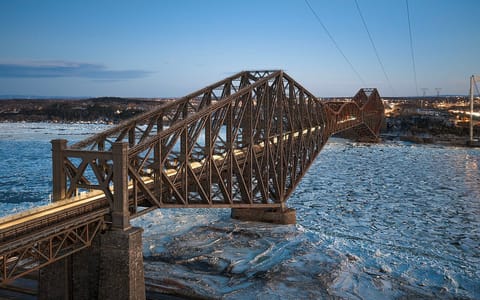
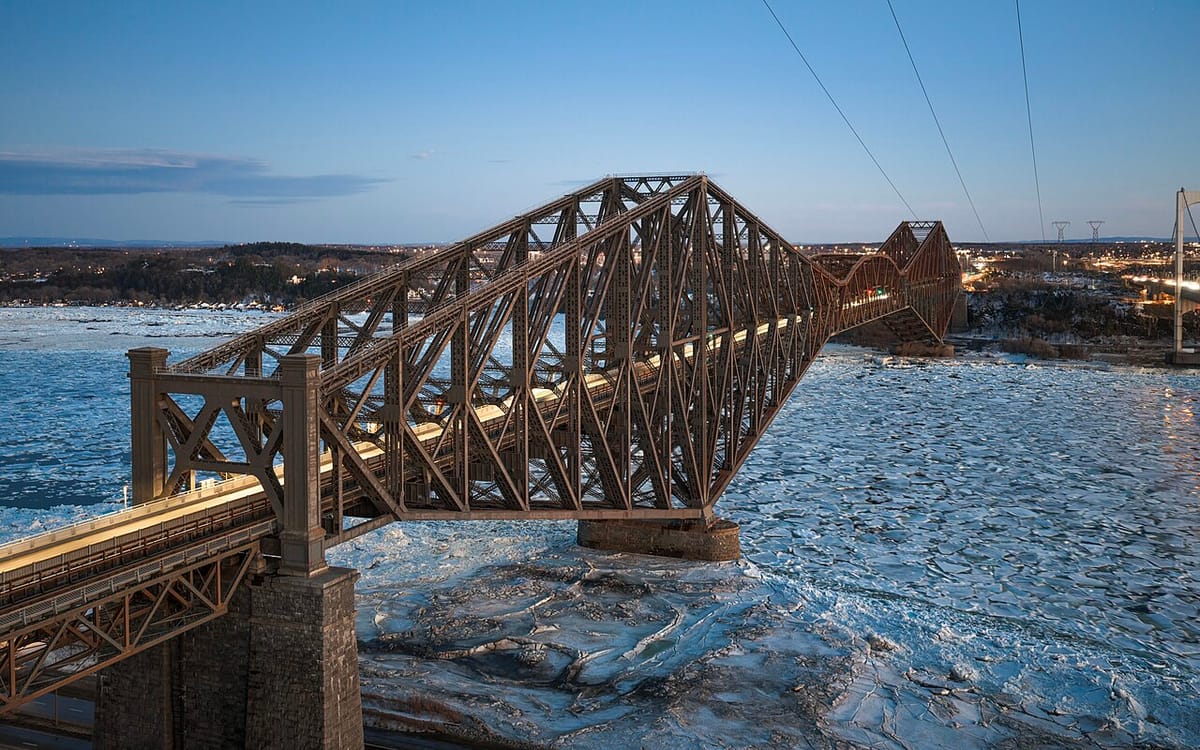
On a late summer afternoon in 1907, the great steel arm reaching out from the south shore of the St Lawrence River carried scores of men high above the water. Within about fifteen seconds it had folded into the current. Today the Quebec Bridge stands on the same crossing, its girders painted a weathered red-brown against the sky, still holding a world record. Here is how a bridge that fell twice came to carry traffic across one of Canada's great waterways.
A River That Divided the Province
Upstream of Quebec City, the St Lawrence River narrows and runs deep, with powerful tides and winter ice that made any crossing difficult. For generations, people travelling between the city and the south shore at Lévis depended on ferries. A fixed link was discussed from the middle of the 19th century, and as railways spread, the case grew stronger. The Quebec Bridge Company was formed to build one, and the project was later tied to the ambitions of a new transcontinental railway.
The foundation stone was laid on 2 October 1900 by the Prime Minister, Sir Wilfrid Laurier. The chosen design was a cantilever bridge, in which two arms project outwards from massive piers and meet a span in the middle. It suited a river too deep and too busy for the temporary supports used on smaller crossings.
Ambition and Warning Signs
The plan was bold, and it became bolder. To avoid building a pier far out in the water, the consulting engineer, Theodore Cooper, stretched the main span from about 490 metres to about 550 metres. That would have made it the longest of its kind in the world. Critics, including a Canadian government engineer, questioned the high stresses that the longer span implied. The weight of the structure was not fully recalculated for the greater length.
By the summer of 1907 the south arm was nearing completion, and the steel itself was complaining. Site engineers noticed that some of the lower compression members, the heavy girders carrying the greatest loads, were bending out of line. Work carried on while messages passed between the site and Cooper in New York.
Fifteen Seconds in August
On 29 August 1907 the failure came without further warning. A compression chord in the anchor arm buckled, then others followed, and the whole south cantilever and its anchor arm crashed into the river. Of the 86 men working on the structure, 75 died. Among them were 33 Mohawk ironworkers from Kahnawake, a community already celebrated for its skill at height.
The bridge collapse of 1907 remains one of the most studied cases of engineering disaster. A Royal Commission concluded that the main cause was the poor design of the compression chords, and it placed much of the responsibility on the design and oversight of the project. The inquiry's findings led to tighter standards and a stronger sense of responsibility among engineers.
The Second Fall
The federal government took charge and ordered a new bridge with a heavier and more robust design. Work resumed in 1913. The central span, around 195 metres long and weighing thousands of tonnes, was assembled in Sillery Cove, then floated out on barges to be lifted between the two cantilever arms.
On 11 September 1916 a casting in the lifting gear failed and the span tipped into the river. Thirteen more men died. The wreck was never recovered, and it is said to lie on the riverbed to this day. Together, the two accidents cost 88 lives.
Finished at Last
A replacement span was built, and on 20 September 1917 it was raised successfully into position. The Quebec Bridge entered service in the following years and was formally opened in 1919. Its main span measures 549 metres, and the whole structure is 987 metres long. It was built to carry two railway tracks and a single roadway, and it was later adapted for road traffic and pedestrians.
The bridge is still the longest cantilever span anywhere. The title has outlasted the era of great riveted steel trusses, because later builders turned to cable-stayed and suspension designs for long crossings.
The Quebec Bridge Today
The bridge is a National Historic Site of Canada, and in 1987 it was recognised as an International Historic Civil Engineering Landmark. It now stands beside two modern road crossings, but it still carries trains and traffic. Its upkeep has long been debated, because the sheer size of its steelwork makes cleaning and repainting a large and costly task.
Visitors can see it from the waterfront at Quebec City, from the south shore, and from the river itself. Memorials nearby recall the men who died, and Kahnawake has held its own commemorations for the Mohawk ironworkers lost in 1907.
The disaster also left a mark on the profession. The Iron Ring ceremony, which Canadian engineers have taken part in since the 1920s, is often linked to the lessons of the Quebec Bridge. The ring is a small reminder of the obligations that come with building structures that others will trust with their lives. That is the bridge's most lasting legacy, alongside its record span.