
Rising Over Toronto: The Story Behind the CN Tower
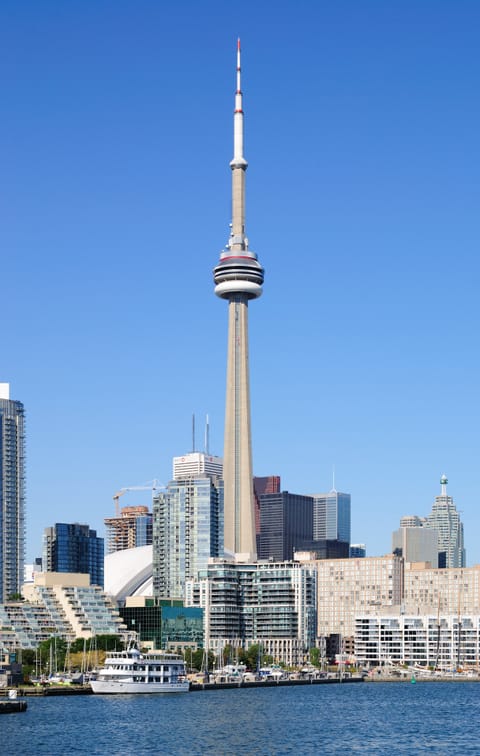
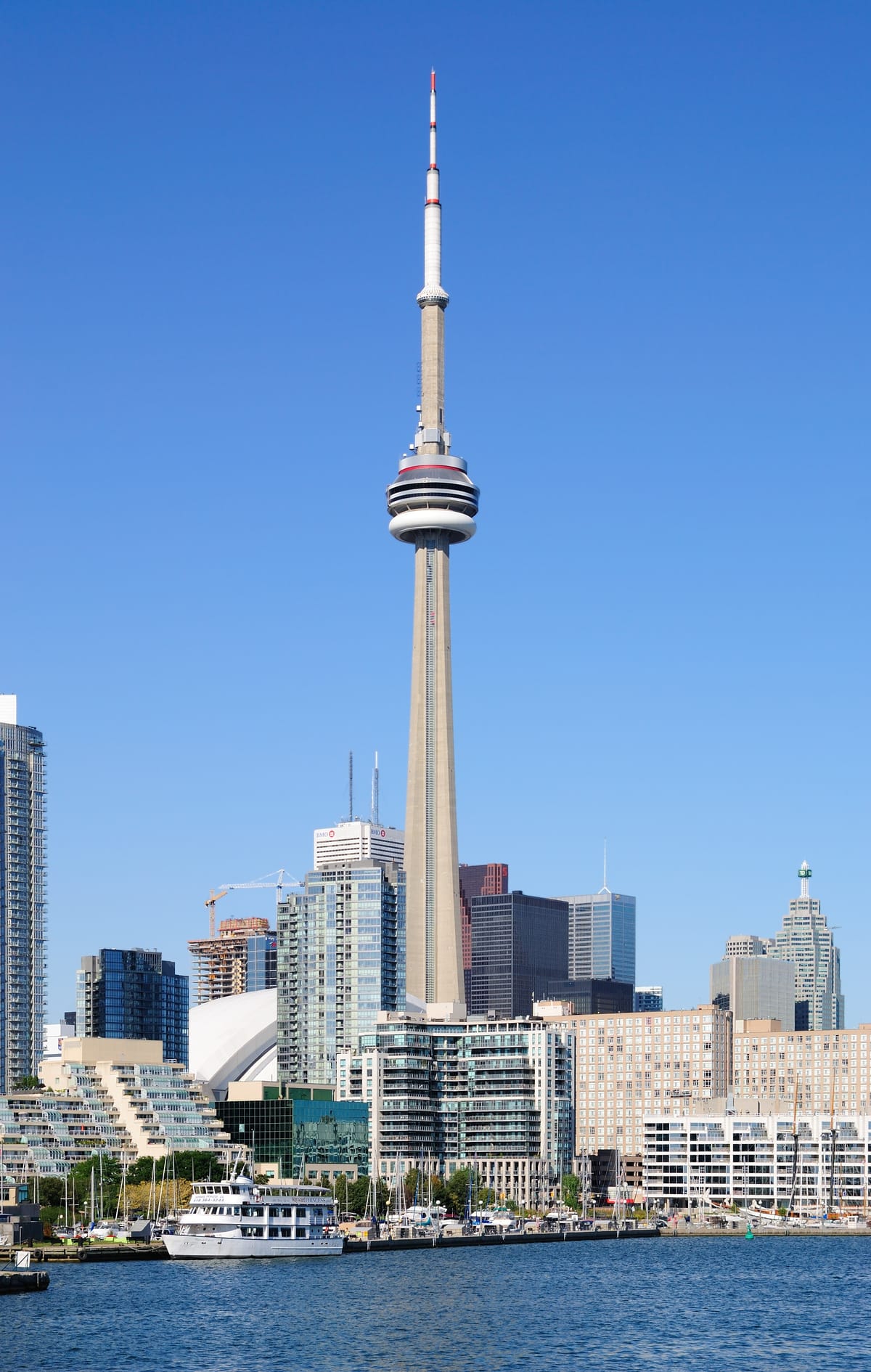
Few structures define a city's skyline as completely as the CN Tower defines Toronto's. Rising more than 550 metres above the shore of Lake Ontario, it is visible for kilometres in every direction. Yet the tower was not built as a monument or tourist attraction. It began as a practical answer to a modern problem, and only later became one of the world's most famous Toronto landmarks and a symbol of Canadian engineering.
A Broadcasting Problem in a Growing City
In the 1960s, Toronto was changing quickly. A wave of new office towers was transforming the downtown core, and the city's skyline grew taller each year. That growth created an unexpected problem for broadcasters. Television and radio signals sent from lower transmission towers were bouncing off the new high-rises, which caused poor reception, distorted pictures and the ghost images familiar to viewers of the era.
The solution was to place antennas higher than anything around them. A transmission tower tall enough to clear the downtown buildings could send signals cleanly across the region. Canadian National Railway, which owned large areas of railway land near the waterfront, proposed building such a tower. The company also saw an opportunity to show what Canadian industry could achieve.
Designing a Record-Breaker
The tower's design came from a team that included John Andrews Architects and WZMH Architects, with structural engineering by NCK Engineering. Their concept had a slender concrete shaft with a hexagonal core supported by three curved legs, which gives the tower a Y-shaped footprint. This shape provided stability against wind while keeping the structure elegant and narrow.
Near the top, the designers placed a main pod holding observation decks, broadcasting equipment and a restaurant. Higher still, a smaller observation level and a tall steel antenna mast completed the design. The finished structure would reach about 553 metres, making it the tallest freestanding structure in the world.
Building the Tower in the 1970s
Construction began in February 1973. Crews worked around the clock, and the project drew attention for its pace and precision.
Slipform Concrete Construction
The concrete shaft was built using a technique called slipforming. A large mould, or form, was slowly raised by hydraulic jacks while concrete was poured into it without stopping. As the concrete set, the form crept upward and the tower grew steadily. Engineers had to keep the shaft almost perfectly vertical as it climbed, and they checked its alignment carefully throughout the work.
Lifting the Antenna
The steel antenna at the top presented a separate challenge. It was assembled in sections and lifted into place by a large heavy-lift helicopter, a Sikorsky Skycrane. The final piece was installed in April 1975, which completed the structure and secured its place in the record books.
Opening to the Public
After the interior work and the installation of elevators and broadcasting equipment were finished, the CN Tower opened to the public in June 1976. Glass-fronted elevators carried visitors up the shaft in under a minute and gave them dramatic views as they rose.
From Utility to Icon
Although broadcasting was its original purpose, the tower soon became a destination in its own right. Visitors came to see the city from above, and the structure quickly appeared in postcards, films and images of Toronto around the world.
Over the decades, new attractions have kept the experience fresh:
- The LookOut level, which offers wide views over the city and Lake Ontario.
- The glass floor, added in the 1990s, which lets visitors look straight down hundreds of metres.
- The SkyPod, one of the highest observation platforms in the world.
- The revolving restaurant, which rotates slowly so diners can enjoy a full panorama during their meal.
- EdgeWalk, opened in 2011, a hands-free walk around the outside of the main pod for those with a head for heights.
Ownership passed from Canadian National to the federal Crown corporation Canada Lands Company in the mid-1990s. Today the name is often read as standing for "Canada's National Tower".
An Engineering Feat Recognized Worldwide
The CN Tower held the title of tallest freestanding structure for more than three decades, until it was surpassed by the Burj Khalifa in Dubai in the late 2000s. Even so, its reputation has lasted. In 1995, the American Society of Civil Engineers named it one of the Seven Wonders of the Modern World, alongside projects such as the Panama Canal and the Channel Tunnel.
The tower's lasting importance comes from more than its height. Its design combined function, structural innovation and visual character in one landmark.
The tower still does the job it was built for. It continues to serve as a major hub for television and radio transmission in the Toronto area, which proves that its original engineering purpose was sound.
A Lasting Symbol of Toronto
CN Tower history follows a common pattern for great landmarks: a practical need led to a bold solution, and the solution became an icon. What began as a way to clear broadcast signals over a crowded skyline grew into the defining feature of Toronto and a source of national pride. Half a century after construction began, the CN Tower still rises over the city as a reminder of what ambitious Canadian engineering can achieve.