
Silence in the Square: The 1989 Tiananmen Protests
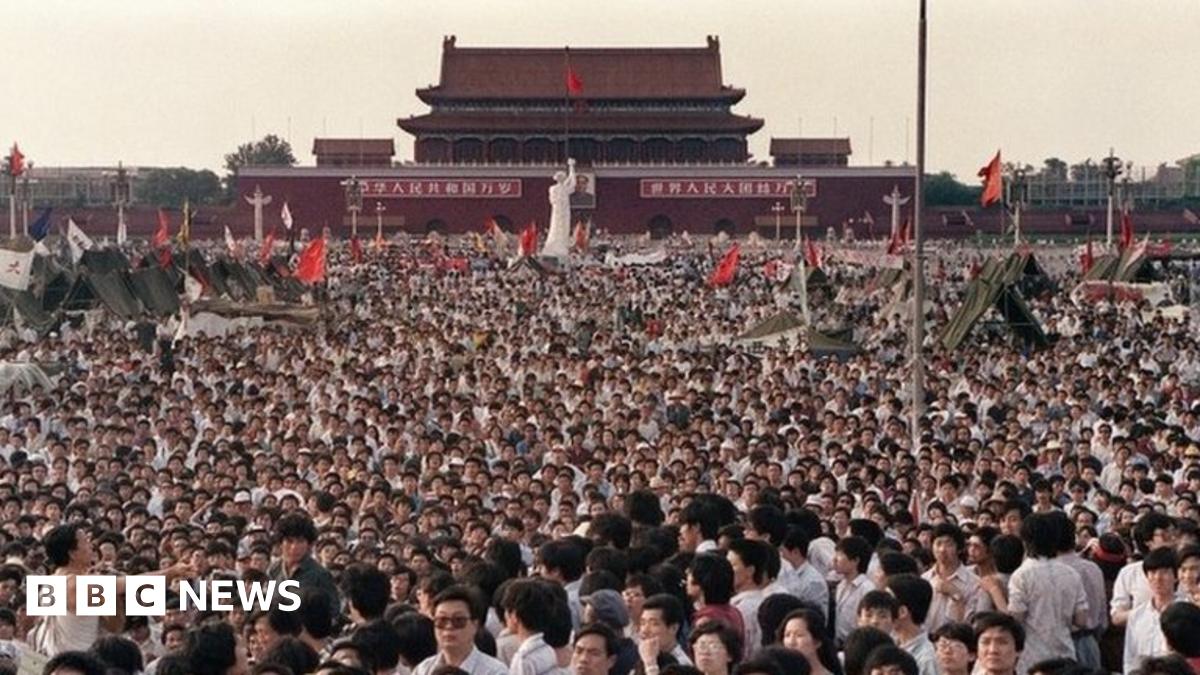
In the middle of Beijing lies one of the largest public squares on Earth, a vast paved space bordered by the Great Hall of the People, the Forbidden City gate and the Monument to the People's Heroes. For most of the year it is a place of flag-raising ceremonies and tourist crowds. In the spring of 1989 it became the stage for seven weeks of protest, and then for a violent night that still shapes how the world sees modern China.
This article sets out what happened, why it happened and why it is remembered so differently inside and outside China.
A Death and a Gathering
The spark was the death of Hu Yaobang on 15 April 1989. He was a former general secretary of the Communist Party who had been pushed from office in 1987 after being blamed for tolerating earlier student demonstrations. Many students and intellectuals saw him as a reformer, and mourning for him quickly became a way of voicing wider frustrations.
Students from Beijing's universities carried wreaths and banners to the square. Their grievances were varied: corruption among officials, rising prices, limited press freedom and the lack of any real dialogue between the leadership and the public. Around the time of Hu's state funeral on 22 April, crowds in the square were counted in the tens of thousands.
Hardening Positions
On 26 April, the People's Daily published an editorial describing the protests as turmoil stirred up by a small group with hidden motives. Many students read this as an insult and a closing of the door. Instead of dispersing, the movement grew, and similar demonstrations spread to other cities across the country.
In mid-May the protest reached its most visible moment. Students began a hunger strike on 13 May, just before the Soviet leader Mikhail Gorbachev arrived for the first Sino-Soviet summit in decades. The visit drew hundreds of foreign journalists to Beijing, and the occupied square became an international news story. Workers, teachers and other citizens joined marches in support, and the crowds swelled to many hundreds of thousands.
Divisions in the leadership
The Party leadership was split. Zhao Ziyang, the general secretary, favoured conciliation, and on 19 May he went to the square to speak with the hunger strikers, visibly exhausted and apologetic. Premier Li Peng and the senior figure Deng Xiaoping took a harder line. Martial law was declared in parts of Beijing on 20 May, though crowds of residents initially blocked army convoys from reaching the centre.
The Night of 3–4 June
By late May the numbers in the square had fallen, and the protesters were tired and divided over whether to leave. On 30 May students unveiled a plaster and foam statue they called the Goddess of Democracy, which stood facing the portrait of Mao Zedong above the Gate of Heavenly Peace.
On the evening of 3 June, troops and tanks of the People's Liberation Army advanced on the city centre. Much of the shooting took place on the approach roads, especially along Chang'an Avenue and in western districts such as Muxidi, where soldiers fired on crowds who tried to hold them back. By the early hours of 4 June the army had taken control, and the students who remained in the square were allowed to leave.
No agreed death toll exists. Official Chinese statements gave figures in the low hundreds, including soldiers, whilst independent researchers, relatives' groups and foreign observers have suggested far higher numbers, running to the thousands. The true figure is unlikely ever to be settled while records remain closed.
Tank Man and the Aftermath
On the morning of 5 June, a lone man in a white shirt stood in front of a column of tanks on Chang'an Avenue, and photographers filmed him from a hotel balcony. The man stopped the column, climbed briefly onto the lead tank and was then led away. His identity and fate remain unknown, but the image became one of the most recognisable of the 20th century.
The crackdown was followed by arrests, trials and prison sentences for participants, and many student leaders fled abroad. Zhao Ziyang was removed from his post and lived under house arrest until his death in 2005. Jiang Zemin replaced him as general secretary. Western governments imposed sanctions, including arms embargoes, some of which remain in some form.
Memory and Silence
Within mainland China, discussion of the events is tightly controlled. Online searches are filtered, school textbooks say little, and the anniversary passes without public marking. A group known as the Tiananmen Mothers, made up of relatives of those killed, has campaigned for decades for an account of what happened and for compensation.
For many years, candlelit vigils were held on 4 June in Hong Kong, but these have been curtailed in the years since the 2020 national security law. Elsewhere, including in the United Kingdom, diaspora communities and rights groups continue to mark the date.
Tiananmen Square itself looks much as it did before 1989: broad, orderly and heavily watched. Its legacy lies less in its stones than in the arguments about memory it provokes, and in the stark reminder of how quickly a public space can become a place of national trauma.